Cartoner

Cartoner is a fully automatic secondary packaging machine that opens a flat carton blank, guides the product inside from both end-load and top-load positions, then closes and seals every flap — delivering a finished, retail-ready carton continuously at production speed. 

No manual folding. No manual loading. No manual sealing. One machine handles the entire sequence so your team does not have to.

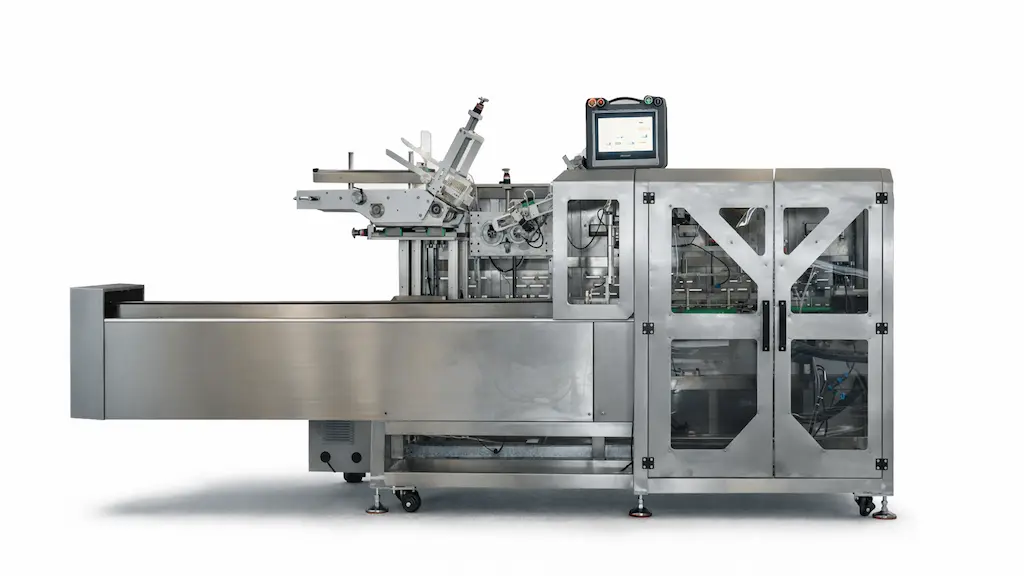
Cartoner-with-white-background

Demo

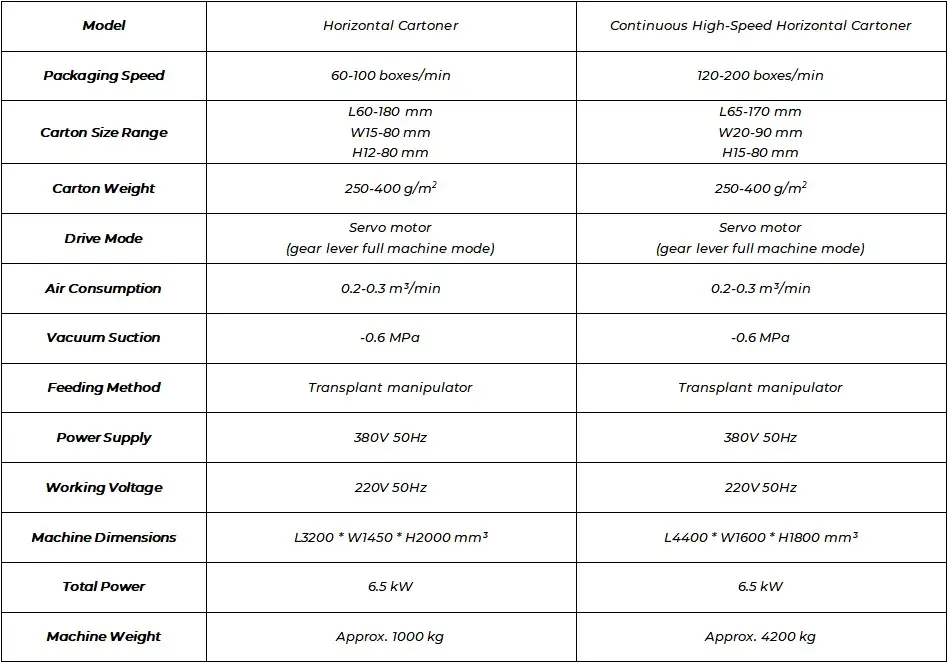
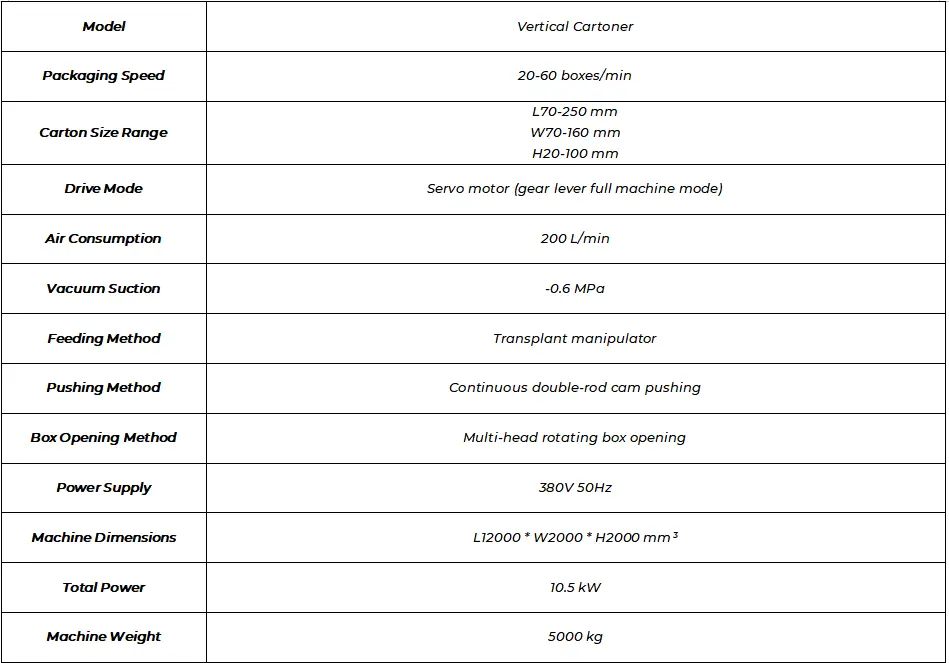
Technical Specifications

How it works?

Preparatory step

Before the Cartoner runs, two things need to be prepared.

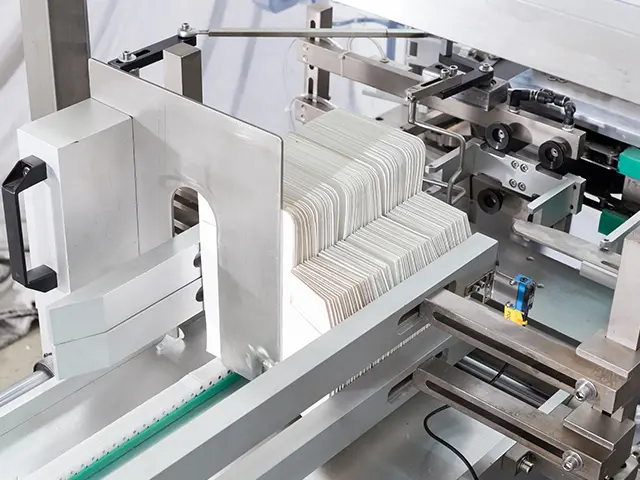
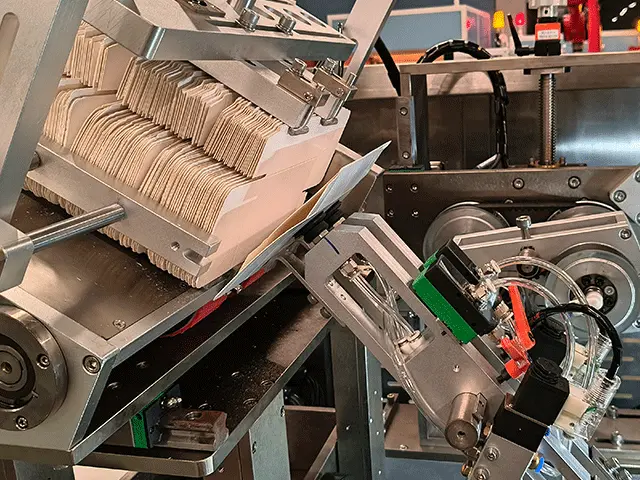
First, the carton magazine is loaded with flat, pre-printed, pre-cut, and pre-scored carton blanks — stacked in a vertical or horizontal rack at the feed end of the machine. These blanks are already creased at every fold line by the carton manufacturer, so the machine does not need to score or cut anything.

carton-magazine-is-stacked-in-a-rack
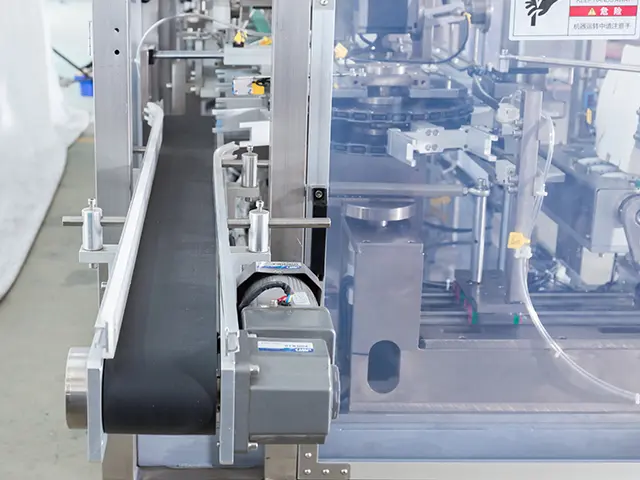
a-conveyor-bringing-products-from-upstream

Second, the upstream equipment — whether that is a filling machine, a blister packer, a flow wrapper, or a conveyor bringing product from a previous stage — is connected and running so that product arrives at the loading station in a continuous, timed flow.

Step1 - Carton blank feeding

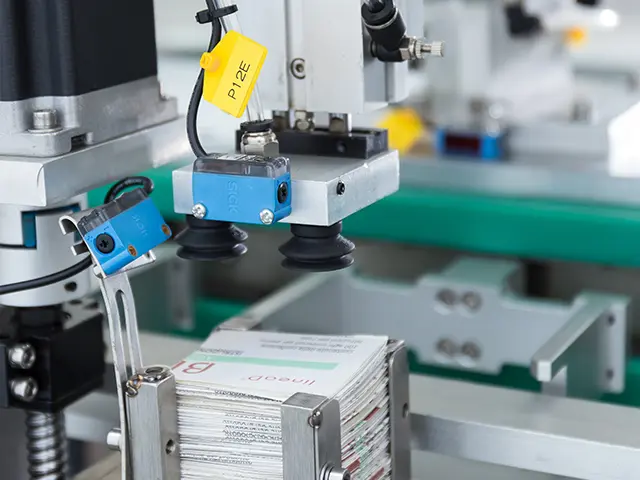
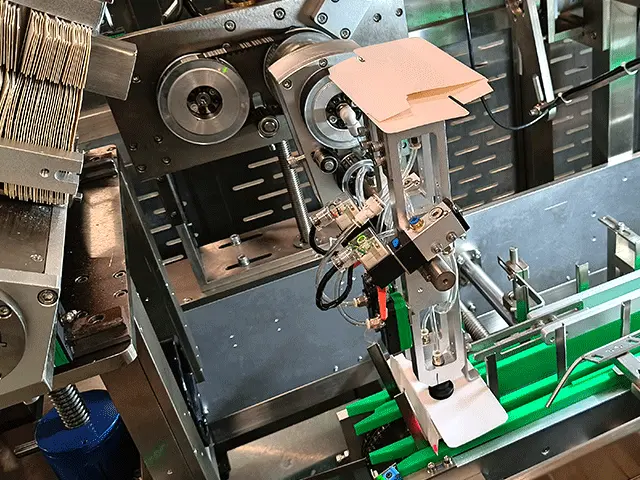
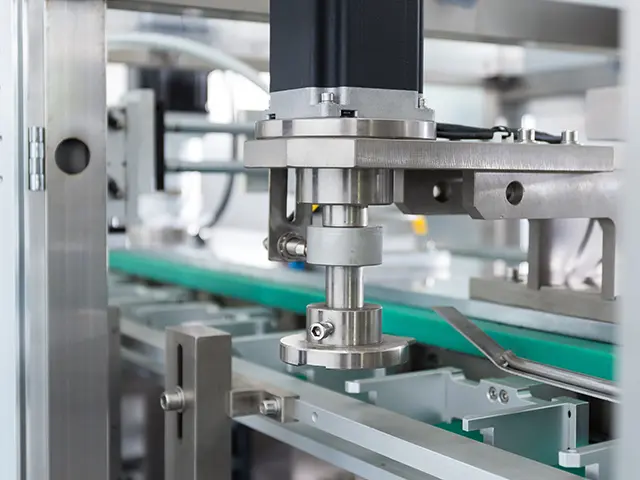
The process begins at the magazine. A suction cup system — typically two to four vacuum cups mounted on a mechanical arm — reaches into the magazine, grips the face of the front blank, and pulls it away from the stack in a single smooth motion. The remaining blanks stay in position, held by guide rails on the sides of the magazine. The pulled blank is transferred forward into the opening station, still flat at this point.

A-vacuum-suction-cup-attaches-to-the-surface-of-the-front-billet-and-pulls-it-out-of-the-billet-stack

Step2 - Carton opening

At the opening station, the flat blank is gripped on both its front face and its back face simultaneously — the front face held by suction cups on a fixed plate, the back face gripped by suction cups on a moving plate. The two plates move apart from each other in opposite directions, pulling the blank open along its pre-scored fold lines. As the blank opens, its four side walls rise into position and the carton takes on its three-dimensional rectangular shape.

The-vacuum-suction-cup-is-ready-to-pull-the-cardboard-out-of-the-stack-of-blanks
The-cardboard-is-formed-at-the-forming-station

Mechanical forming guides on all four sides of the opening station press against the exterior walls of the carton as it opens, ensuring the corners break cleanly along the score lines and the walls stand perfectly square and upright. Without these guides, the cardboard would spring back toward its flat state — the guides hold it in the open position while the next stage begins.

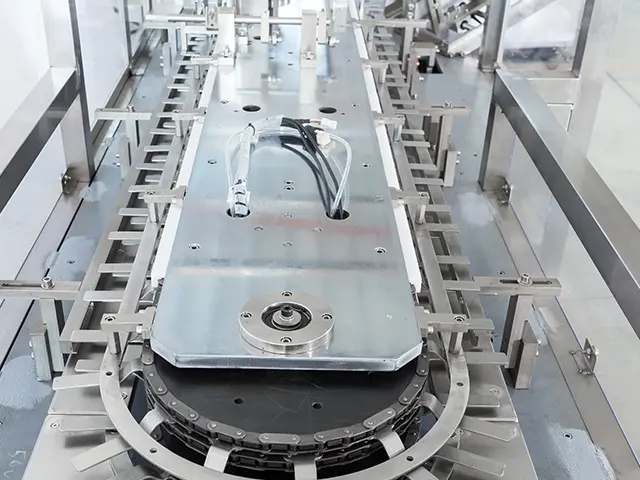
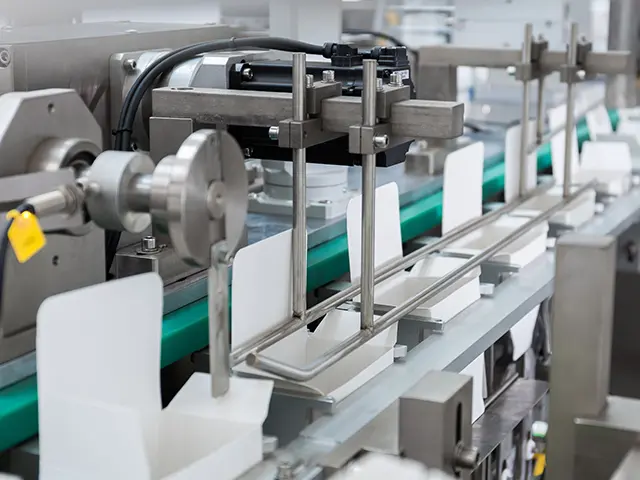
The opened carton is then transferred — either by a mechanical pusher, a gripper arm, or a continuous chain conveyor with carton pockets — to the loading station. The carton travels in pockets or slots on the main conveyor chain, held upright and open throughout.

The-finished-paper-boxes-are-transported-on-a-chain-conveyor

By the way, the production speed of the machine can be increased by adding more suction cup system.

Step3 - Minor flap pre-folding

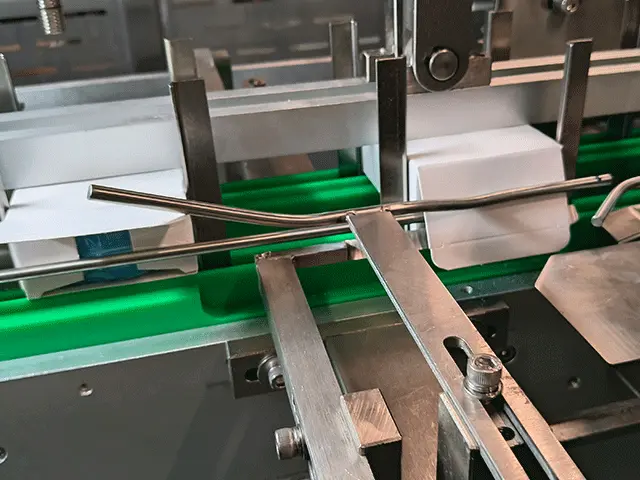
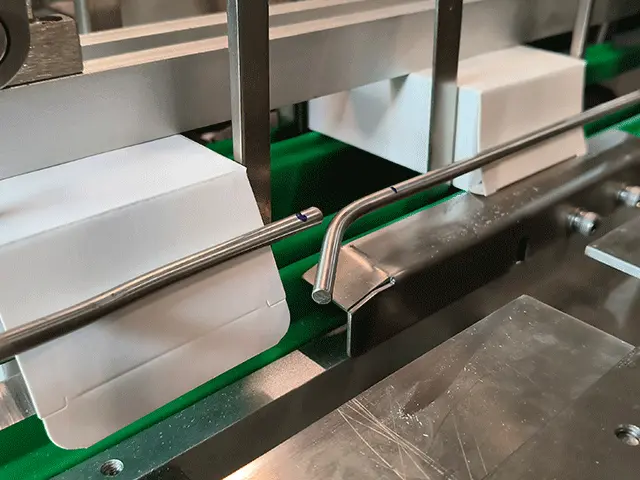
Before product is loaded, the minor flaps — the two shorter flaps on the top and bottom of the carton at the open end or ends — are pre-folded inward by stationary folding rails or mechanical arms as the carton travels along the conveyor. These minor flaps are folded first and held in the folded position while the carton continues moving toward the loading station. Pre-folding the minor flaps before loading ensures they do not interfere with the product entering the carton and sets up the correct flap sequence for sealing later.

On a carton with both ends open — which is the case for end-load cartoners — this pre-folding happens at one or both ends depending on the machine configuration.

Minor-Flap-Formation-System

Step4 - Products loading

This is the step where the product enters the carton. How it enters depends on the loading style.

End-Load

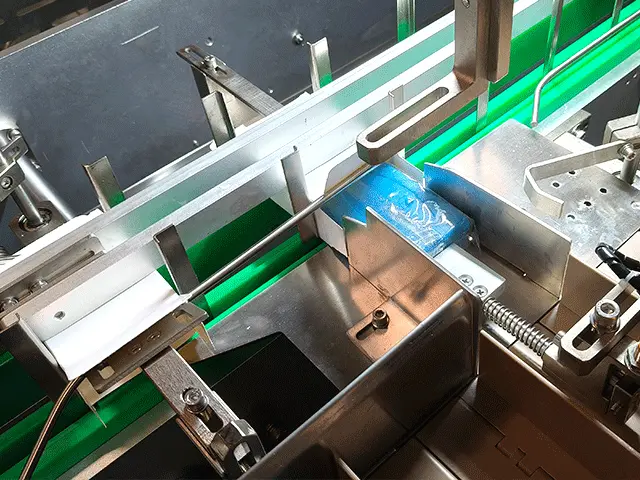
The carton travels horizontally along the conveyor with one end open and facing sideways. Product arrives from the side — either on a separate infeed conveyor or from a pick-and-place unit — and is pushed into the open end of the carton by a mechanical pusher bar or finger. The pusher moves forward, slides the product through the open end and into the carton body, then retracts to its home position ready for the next cycle. The product must be correctly oriented and aligned before the pusher engages — guide rails and timing belts on the infeed keep the product in position.

product-is-pushed-into-the-open-end-of-the-carton-by-a-mechanical-pusher-bar

Top-Load

The carton sits on the conveyor with its top face open. Product arrives from above — dropped from a chute, placed by a robotic arm, or lowered by a pick-and-place system — and is deposited directly into the open top of the carton. 

The-product-is-loaded-from-the-top-of-the-box

End-Load vs. Top-load

These two loading methods are primarily designed to accommodate different product types and packaging requirements.

  • End-loading is ideal for rigid products that can be pushed without deformation — bottles, tubes, jars, blister packs, folded sachets, and bar-shaped items.
  • Top-loading is preferred for products that cannot be pushed horizontally, products that are fragile, irregularly shaped, or soft — such as pouches, flow-wrapped bars, loose pieces, or delicate items that would be damaged by a horizontal pusher.

Step5 - Flap closing

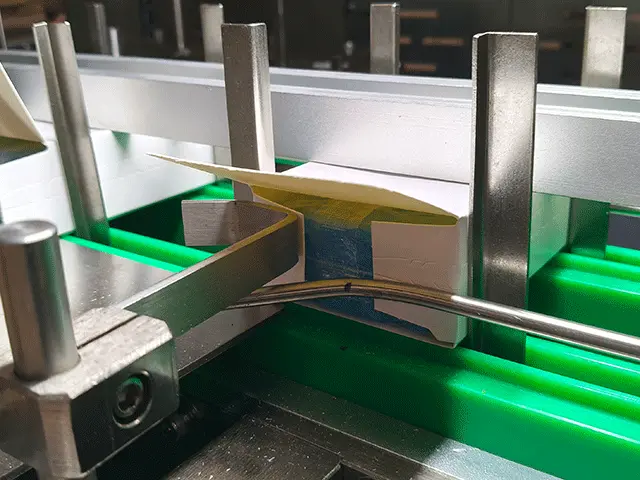
Once the product is inside, the carton continues along the conveyor toward the closing station. Here, the major flaps — the two longer flaps at the open end or ends of the carton — are folded closed over the pre-folded minor flaps by mechanical folding arms or stationary folding rails positioned along the sides of the conveyor path.

the-major-flaps-are-folded-closed-over-the-pre-folded-minor-flaps-by-stationary-folding-rails-positioned-along-the-sides-of-the-conveyor-path

The major flaps fold in sequence — typically one side folds first, then the other folds over the top — creating a flat, neat closure. The folded flaps are held closed by guide rails as the carton continues moving toward the sealing station, maintaining pressure on the closure until the seal is applied.

The-folded-flaps-are-held-closed-by-guide-rails
The-folded-flaps-are-held-closed-by-guide-rails-as-the-carton-continues-moving-forward

Step6 - Discharge

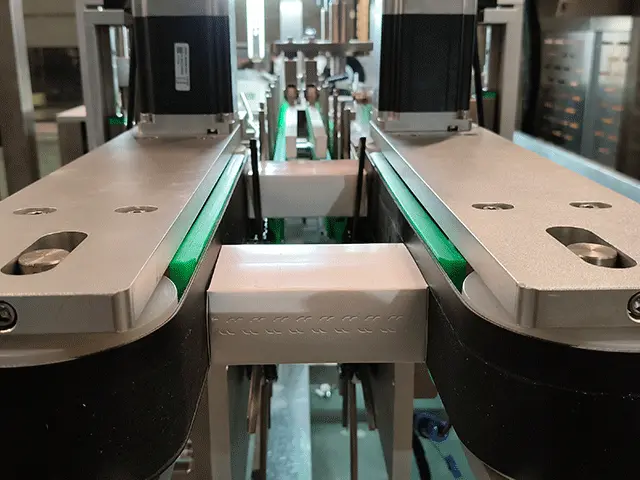
The finished, sealed carton exits the machine onto the outfeed conveyor and travels to the next stage of the production line. Depending on the operation, the next stage might be a labeling machine that applies a product label or batch code to the exterior of the carton, a case packer that loads multiple cartons into a shipping case, a shrink tunnel that wraps the carton in film, or a palletising robot that stacks the finished cartons onto a pallet for despatch.

sealed-carton-exits-the-machine
the-major-flaps-are-folded-closed-over-the-pre-folded-minor-flaps-by-stationary-folding-rails-positioned-along-the-sides-of-the-conveyor-path