Pouch FFS

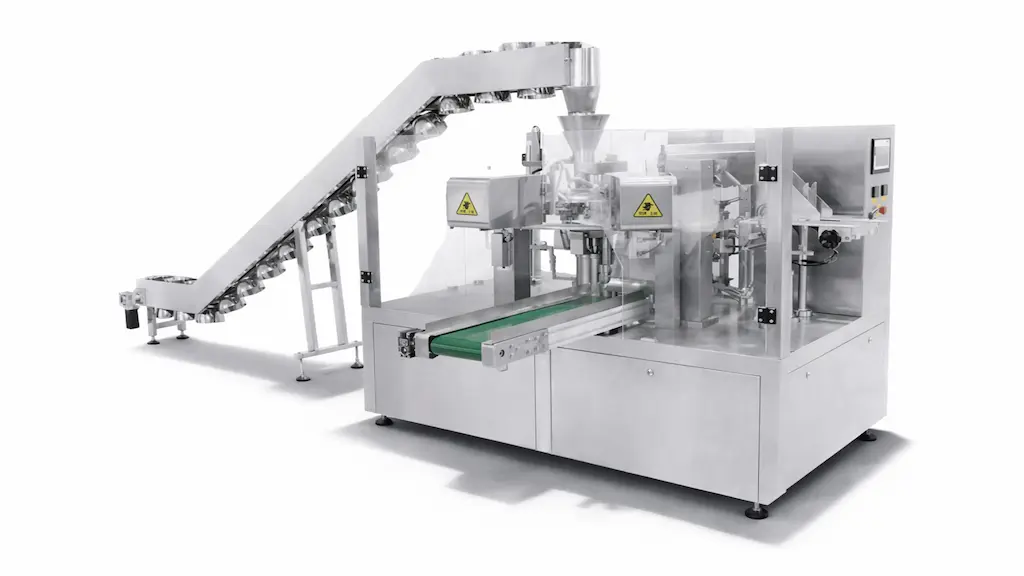
The Pouch FFS machine — also known as a pre-made pouch fill and seal machine — works with pouches that are already fully formed and printed before they enter the machine. It picks each pouch from a magazine one at a time, opens it, fills it with product, and heat-seals the top closed — delivering a finished, retail-ready pouch in one continuous automated sequence.

Pouch-FFS-with-white-background

Demo

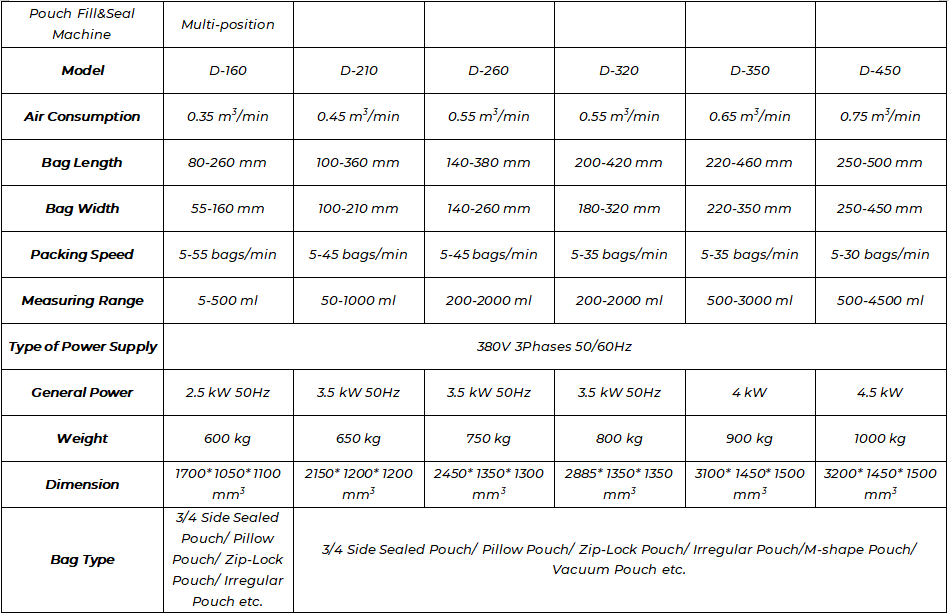
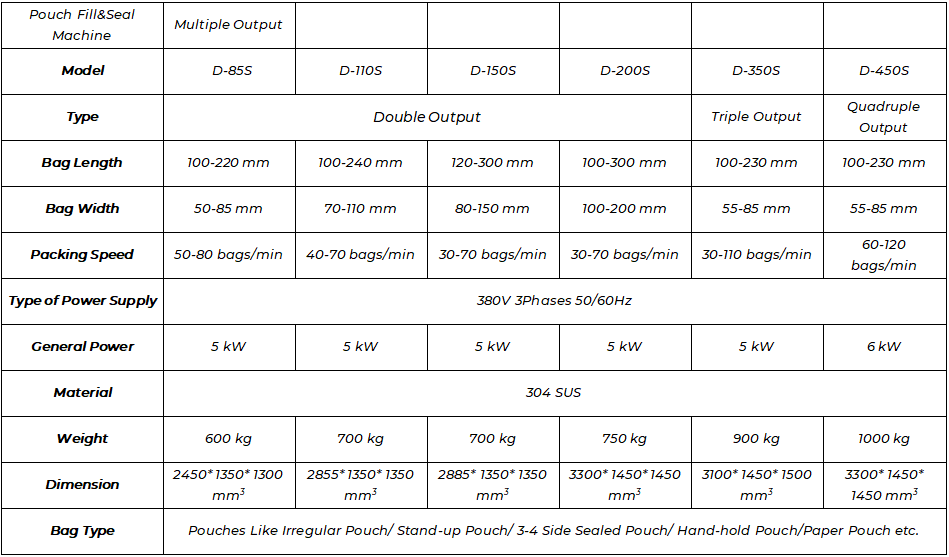
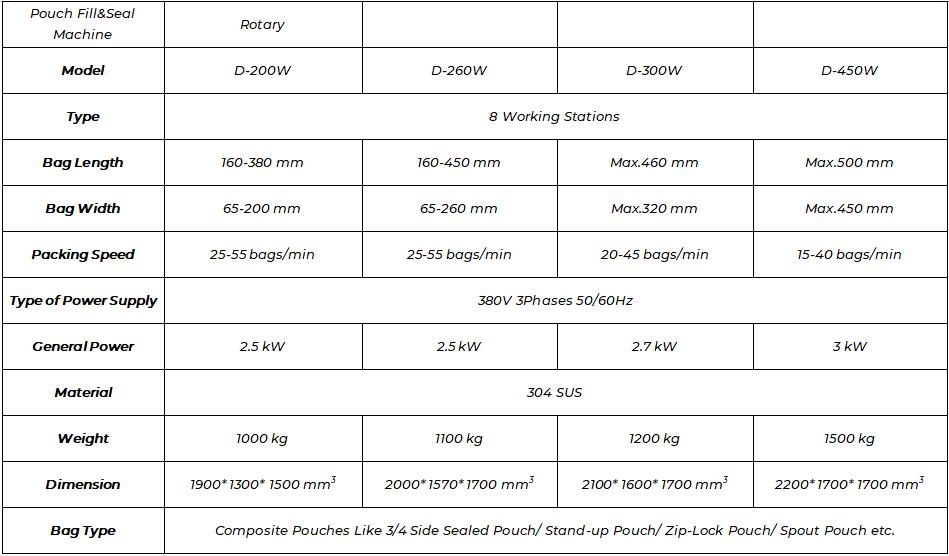
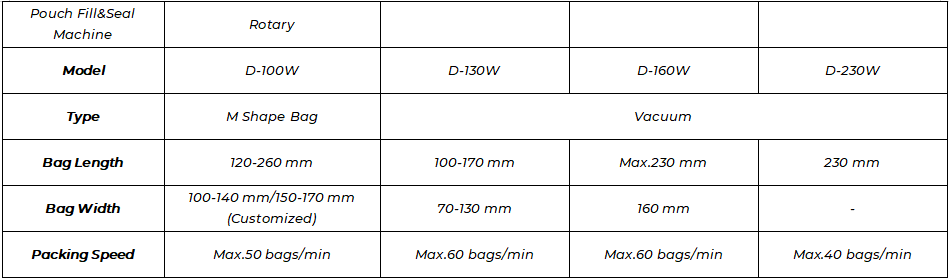
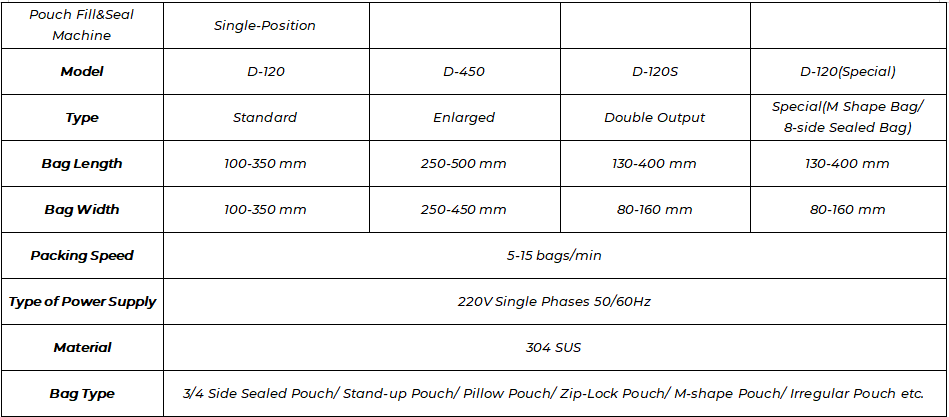
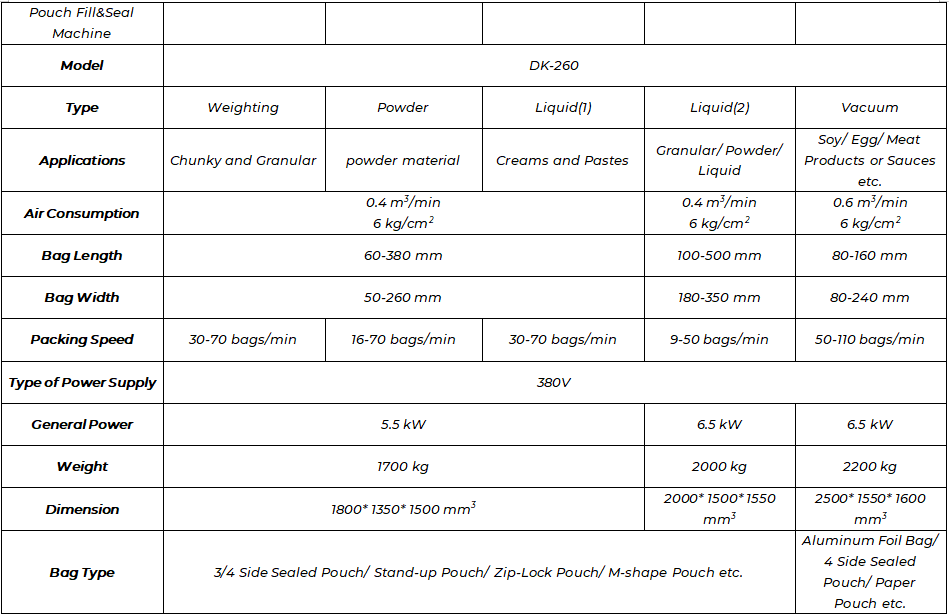
Technical Specifications

How does it work?

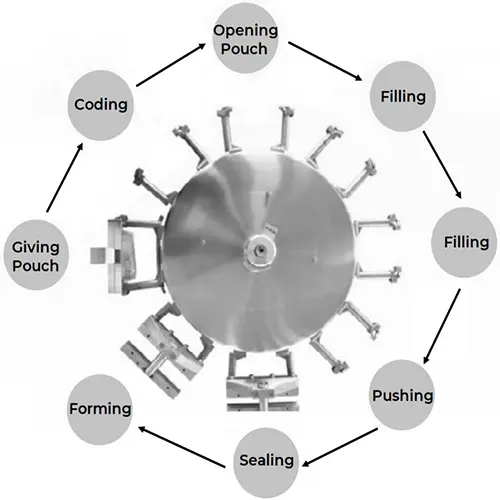
This diagram illustrates the step-by-step process of our machine, from pouch giving to final sealing, ensuring smooth and efficient production.

This-diagram-illustrates-the-step-by-step-operating-procedure-for-a-pouch-FFS-packaging-machine.

Step 01 — Pouch Magazine Loading

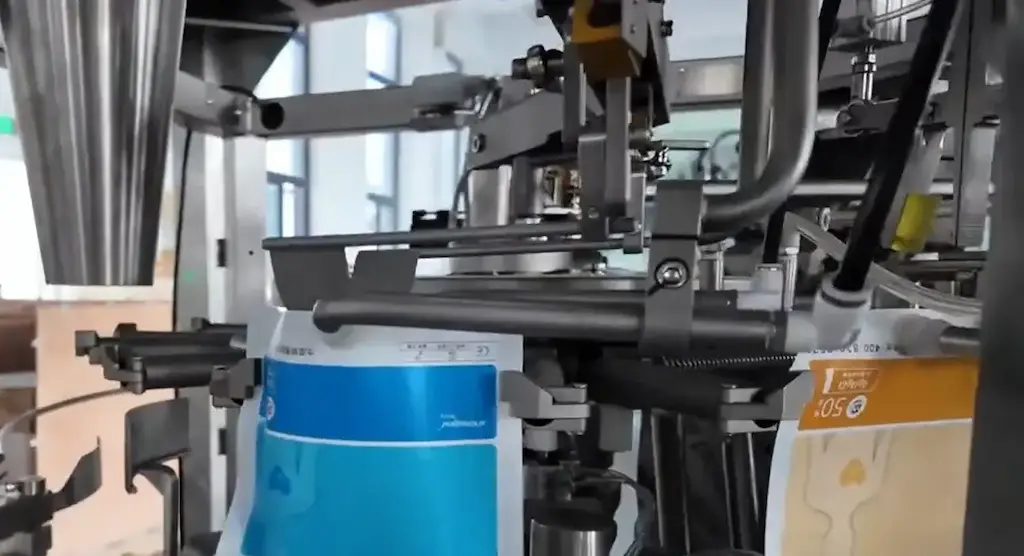
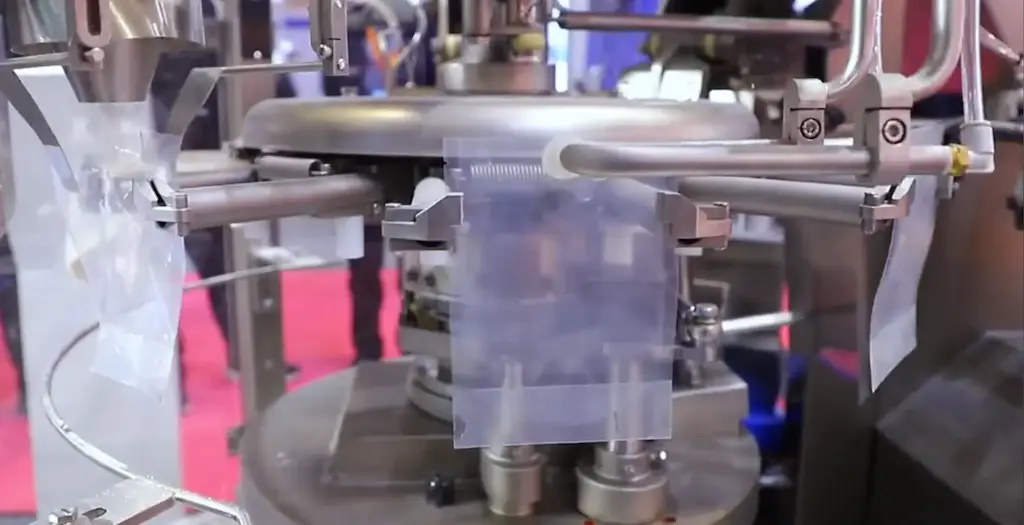
Pre-made pouches are loaded into a magazine — a flat rack or a curved holder at the infeed of the machine — in a stacked formation, face to face. The magazine typically holds enough pouches to run for several minutes before needing to be refilled. On rotary machines, the magazine feeds pouches to a set of gripper clamps mounted on a rotating carousel. the pouches move through the machine in a fixed sequence — one station at a time — so that multiple pouches are being processed simultaneously at different stages of the fill-and-seal cycle.

The-pre-made-bags-are-loaded-into-the-feed-tray

Step 02 — Pouch Picking and Transfer

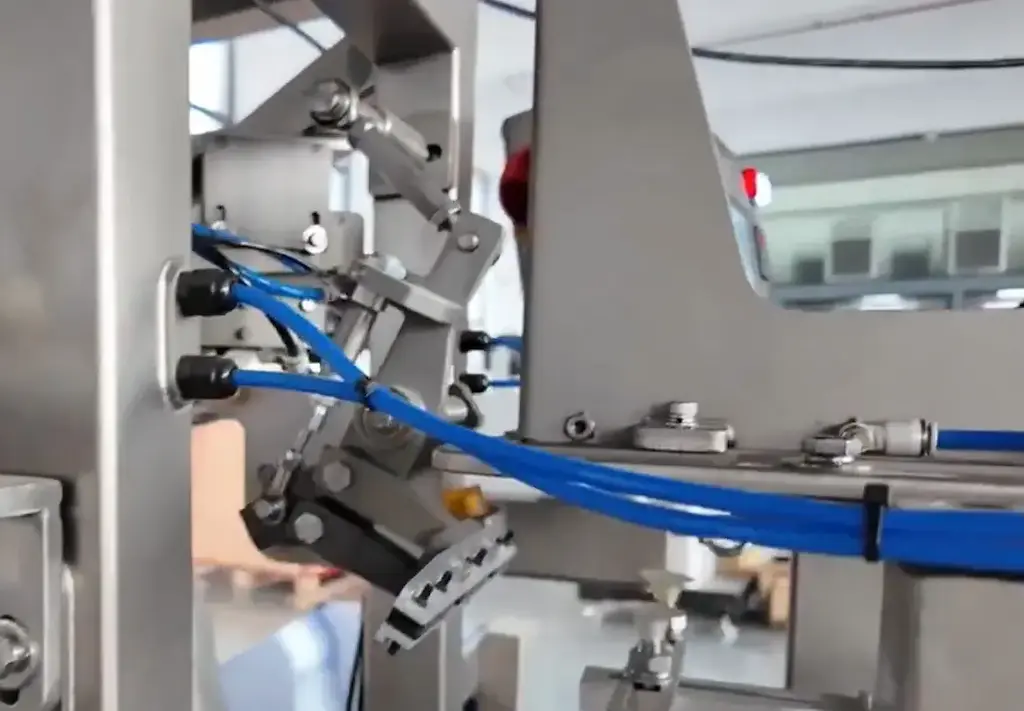
A mechanical arm or a set of suction cups picks the front pouch from the magazine and transfers it to the first gripper station on the carousel or linear track. The gripper clamps grip the pouch at both sides — holding it by its sealed side edges just below the open top — and carry it forward through the remaining stations.

A-mechanical-arm-with-a-set-of-suction-cups-picks-the-front-pouch-from-the-magazine

Step 03 — Pouch Opening

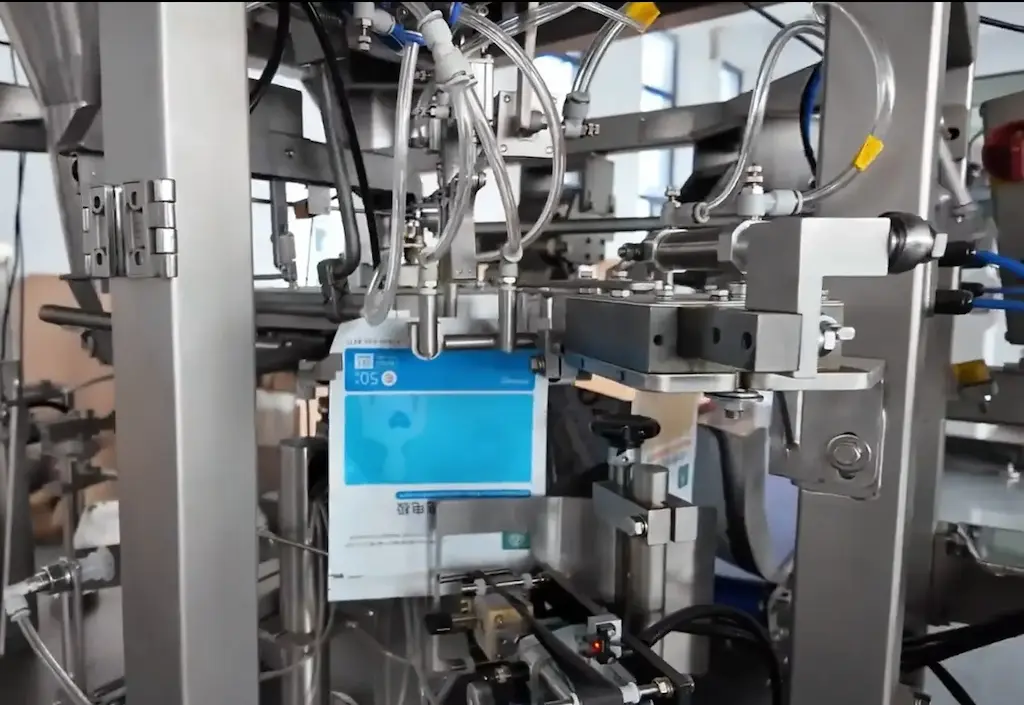
At the opening station, a pair of suction cups — one on the front face of the pouch and one on the back face — move apart from each other, pulling the two film layers of the pouch apart and opening the top of the pouch into a wide, clear opening ready to receive product. For stand-up pouches and gusseted pouches, a small blast of air from a nozzle is directed into the open top of the pouch at the same moment — inflating the interior slightly and ensuring the pouch body opens fully and holds its shape during filling.

A-pair-of-suction-cups-pulls-the-two-layers-of-film-on-the-bag-apart

Step 04 — Filling

At the filling station, the filling nozzle or nozzles descend into the open top of the pouch and deliver the measured product dose. The type of filler used depends entirely on the product

For liquids and sauces

A piston filler, a peristaltic pump, or a flow meter dosing system delivers a precise volume of liquid into the pouch. The nozzle descends to the bottom of the pouch before filling begins and retracts upward as the fill progresses — a technique called bottom-up filling — which prevents splashing, reduces foam, and ensures the liquid fills the pouch evenly without trapping air pockets near the seal area.

a-flow-meter-dosing-system-delivers-a-precise-volume-of-liquid-into-the-pouch

For powders and granules

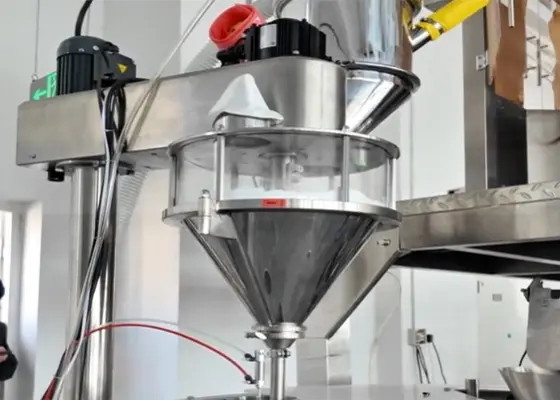
An auger filler or a volumetric cup filler delivers a measured dose of powder or granules through a funnel nozzle into the open pouch. The fill speed is controlled to prevent the powder from dusting up into the seal area, which would contaminate the top seal and cause a weak or failed bond.

An-auger-filler-delivers-a-measured-dose-of-powder-or-granules-through-a-funnel-nozzle-into-the-open-pouch

For solid pieces and snacks

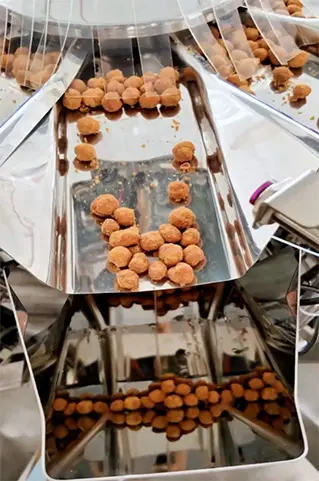
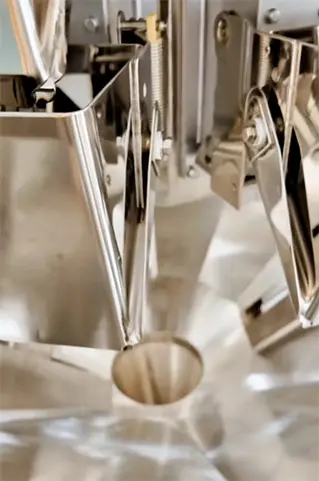
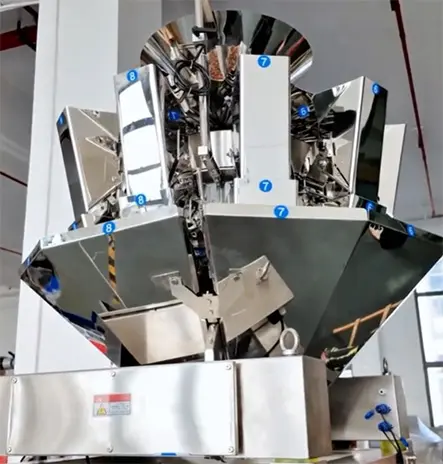
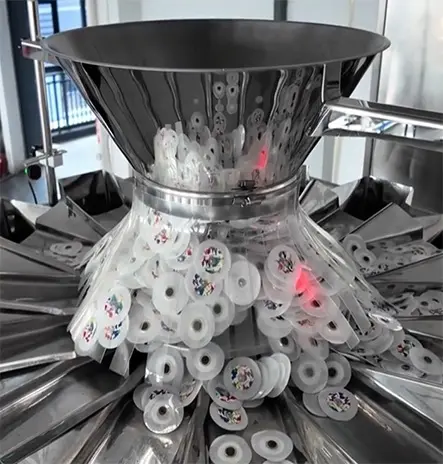
A multihead weigher above the machine delivers a precisely weighed batch of product through a timing gate that opens at the correct moment in the cycle, dropping the product into the open pouch below. The timing gate is coordinated with the pouch position sensor so the product drops only when the pouch is correctly positioned and fully open at the filling station.

The-multi-head-weigher-located-above-the-machine-conveys-precisely-weighed-batches-of-products-to-the-timing-gate
The-gate-opens-at-the-appropriate-point-in-the-production-cycle-to-tip-the-product-into-the-open-bag-below.

Step 05 — Top Seal

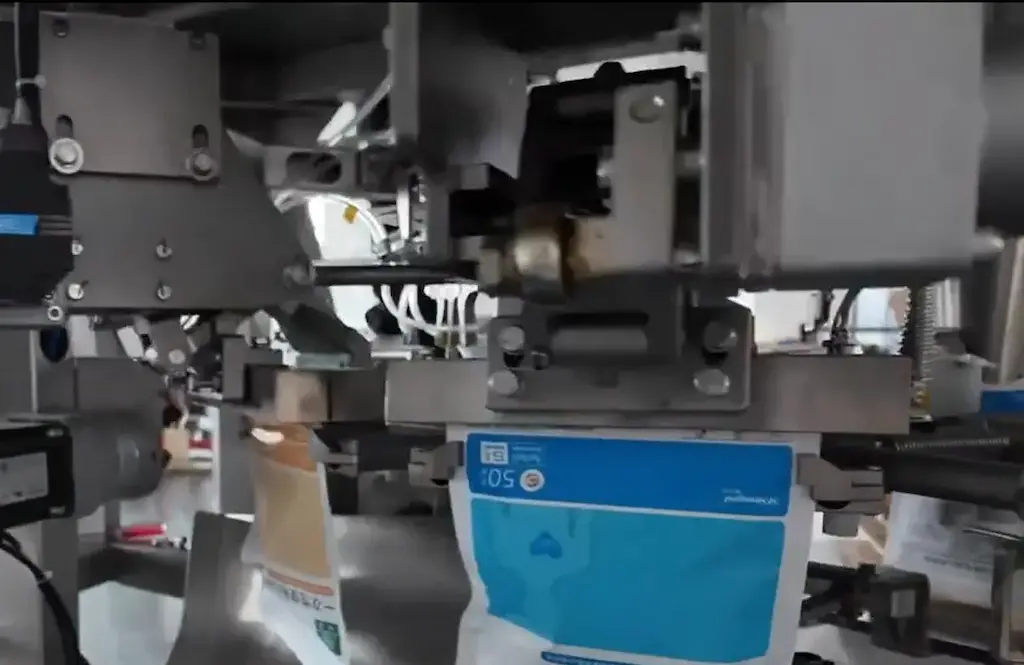
After filling, the pouch advances to the sealing station. A pair of heated sealing bars close across the top of the pouch — below the fill level but above the product — applying heat and pressure to the film layers and beginning the formation of the top seal.

A-pair-of-sealing-bars-applies-heat-and-pressure-to-the-film-layer-and-beginning-to-form-the-top-seal.

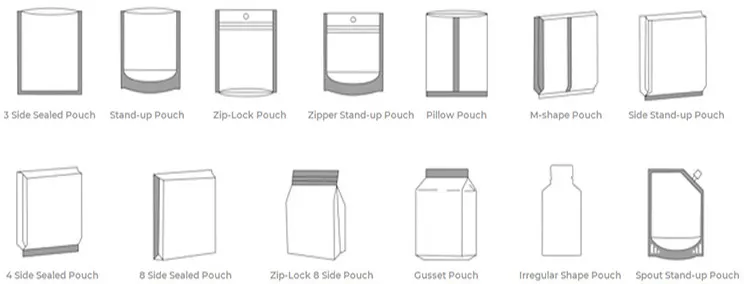
Pouch Styles Supported

Our machine supports a wide range of pre-made pouch types. Below are some examples of the various pouch formats that our system can handle.

Key Features

Precise Filling Accuracy

Multiple filler types — piston, auger, volumetric, multihead weigher — can be integrated with the machine to match the filling method to your specific product, delivering consistent, accurate fill weights and volumes on every pouch with minimal waste.

Multiple-types-of-fillers
Multiple-types-of-fillers-1

PLC Control

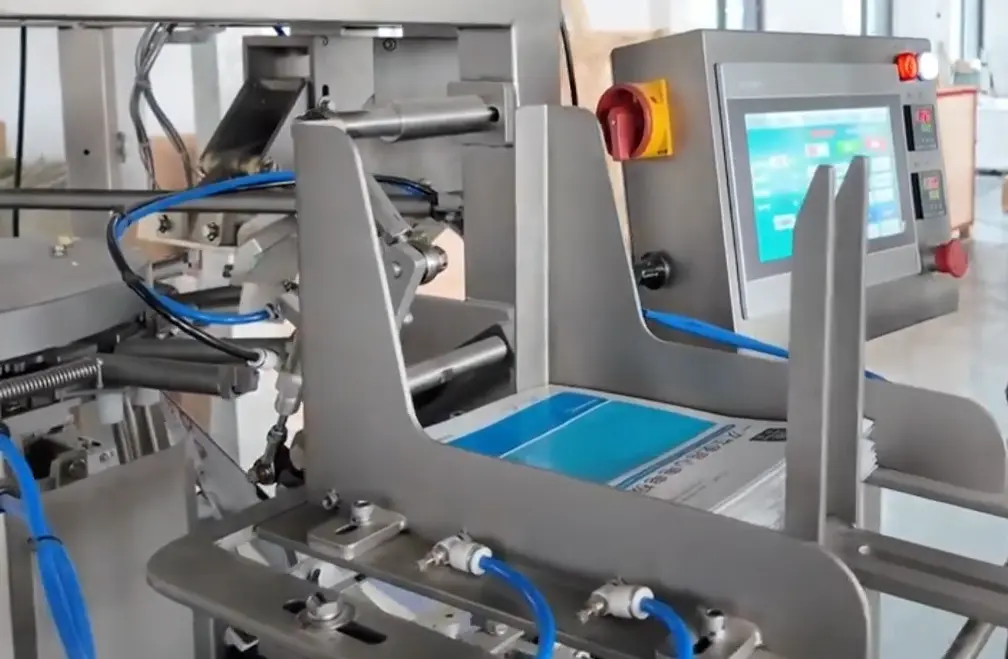
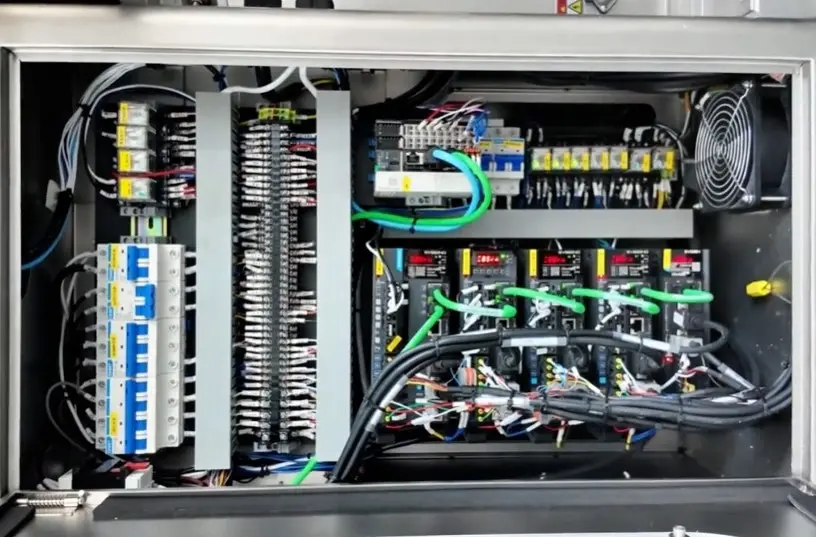
A colour touchscreen panel gives operators full control over all machine parameters — speed, seal temperatures, fill timing, nitrogen flush duration, date coding, and rejection logic — from a single interface. Saved format programs for different pouch sizes and product types are recalled instantly at the start of each production run.

PLC-Control

Continuous Rotary Operation

The machine operates on either a rotary carousel or a linear track system — running multiple pouches simultaneously at different stages of the cycle, so output is continuous and the machine speed is not limited by any single stage.

Continuous-Rotary-Operation