Vertical Form Fill Seal

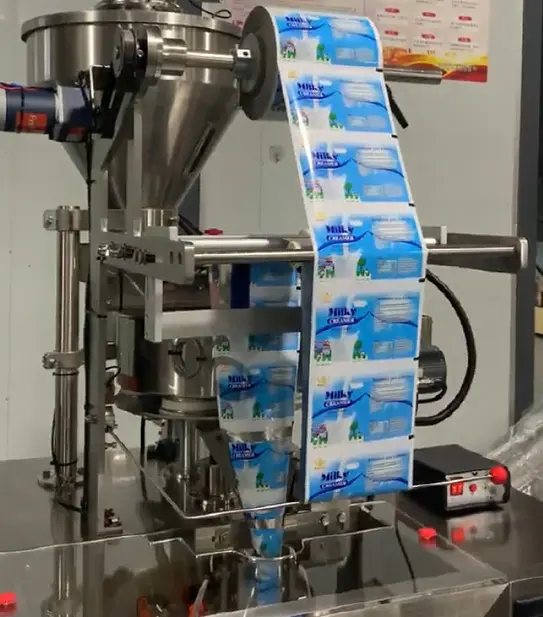
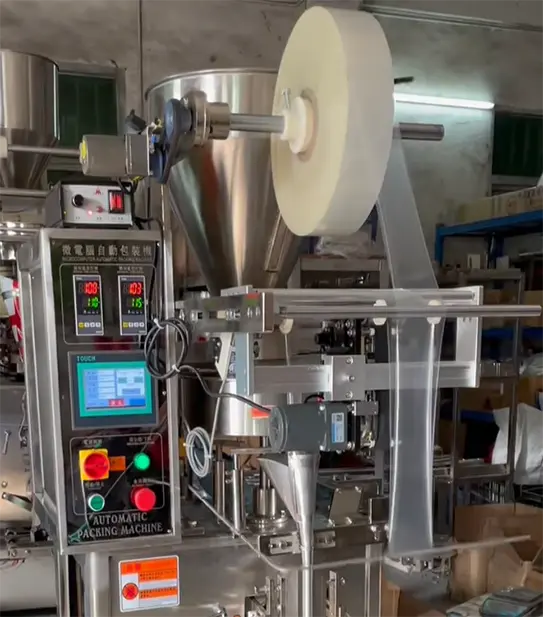
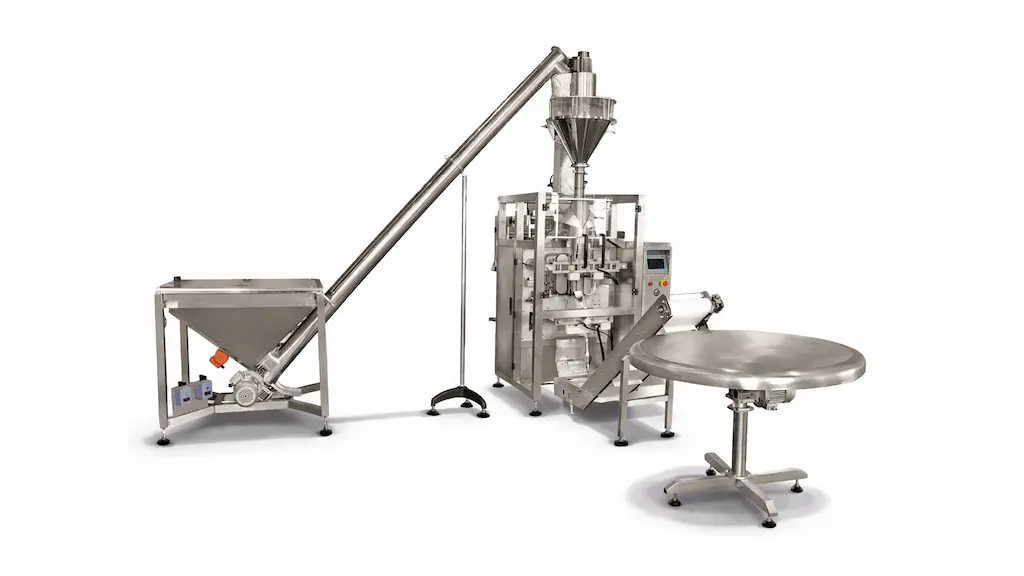
The VFFS machine is a fully automatic packaging machine that forms a flat roll of packaging film into a bag, fills it with product from above, and seals it closed — all in one continuous vertical motion. It is the standard packaging solution for any product that is measured by weight or volume and dropped or poured into a bag — including snacks, nuts, coffee, tea, powder, granules, frozen foods, pet food, and fresh produce.

Vertical-FFS-with-white-background

Demo

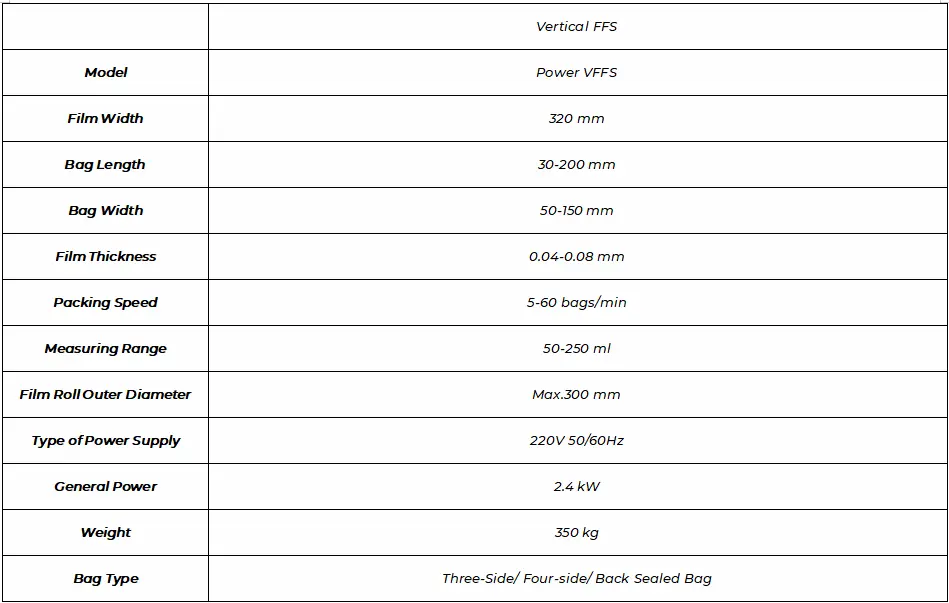
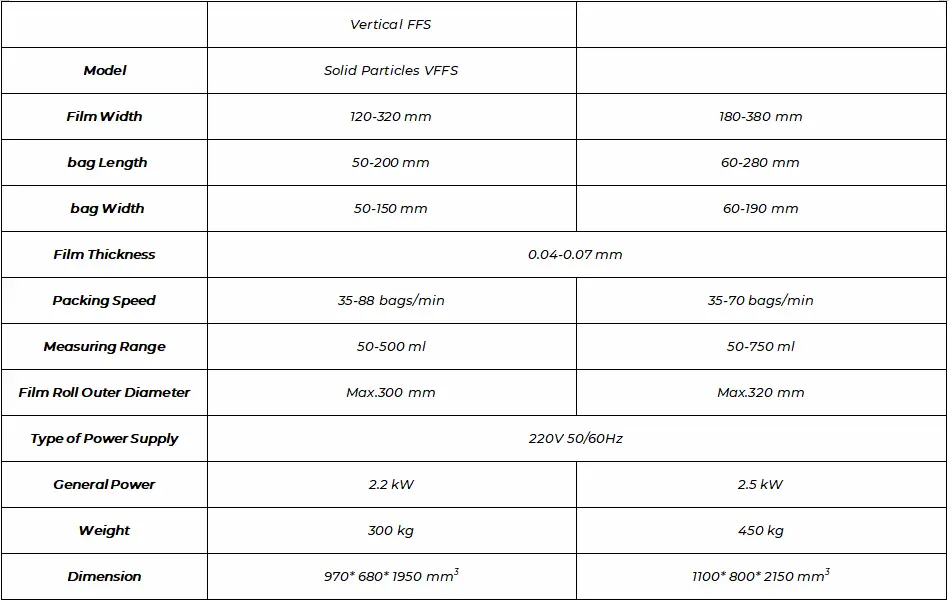
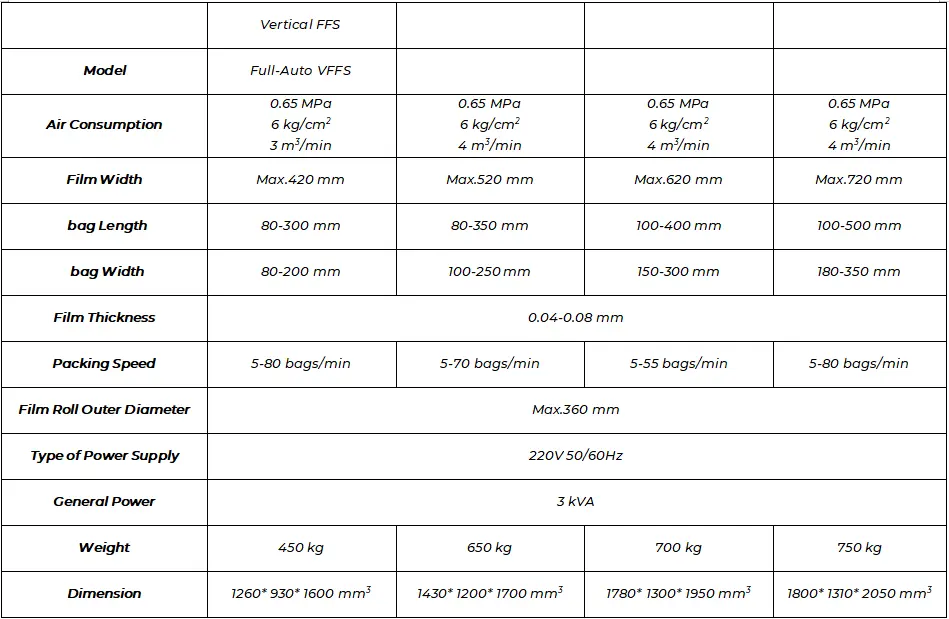
Technical Specifications

How it works?

01 - Film unwind and feeding

A roll of flat packaging film is mounted on a reel holder at the side of the machine. As the machine runs, the film unwinds continuously from the roll and is pulled downward and over a series of guide rollers that route it toward the top of the forming section. 

A dancer roller or electronic tension control system monitors the film tension at all times and signals the film feed servo to adjust its speed, keeping the film under consistent controlled tension as the roll diameter decreases throughout the run. Consistent tension at this stage is critical — uneven tension causes the film to track sideways, wrinkle at the forming collar, or feed unevenly, all of which affect bag shape and seal quality downstream.

Film-Unwinding-and-Feeding-in-VFFS
Film-Unwinding-and-Feeding-in-VFFS-1

02 - Film forming

the-flat-film-passes-over-and-around-a-forming-collar
the-flat-film-passes-over-and-around-a-forming-collar-1

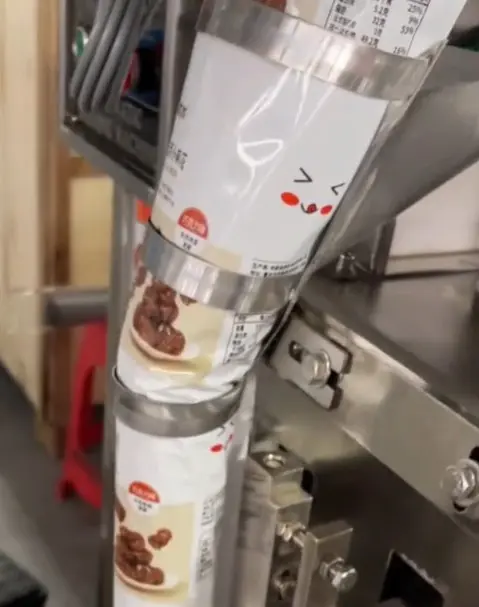
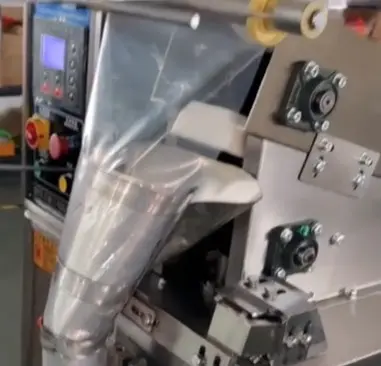
At the top of the machine, the flat film passes over and around a forming collar — a precisely shaped metal shoulder that wraps the flat film into a continuous vertical tube as it passes downward. The forming collar is matched to the bag width required — different collar sizes produce different bag widths. As the film wraps around the collar and descends, its two edges overlap and align vertically along the front face of the forming tube, ready to be sealed into the back seam of the bag.

The forming collar is one of the most important components of the machine — its geometry determines the bag shape, the film tracking accuracy, and the consistency of the back seam alignment.

03 - Vertical back seam sealing

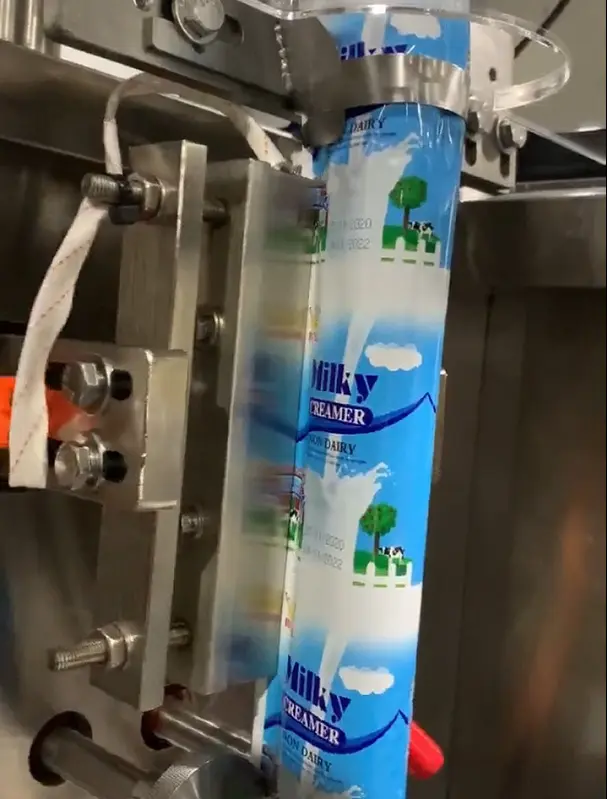
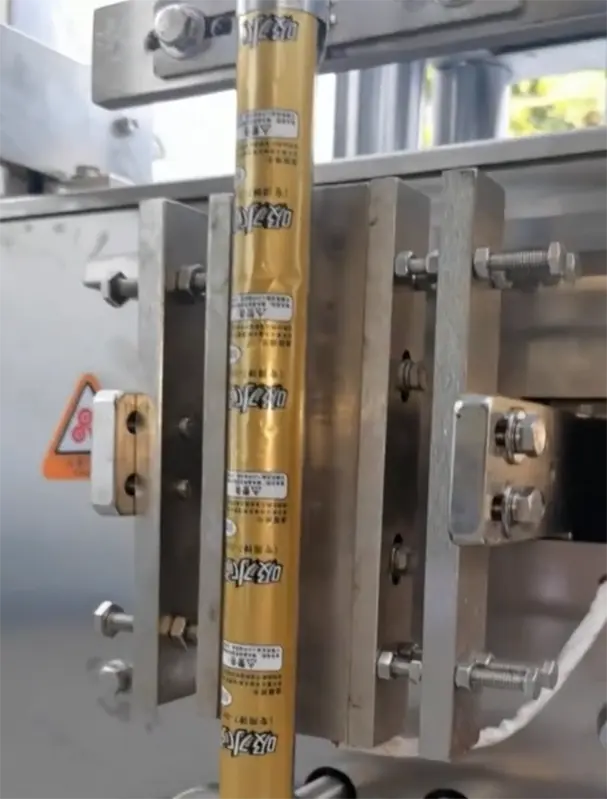
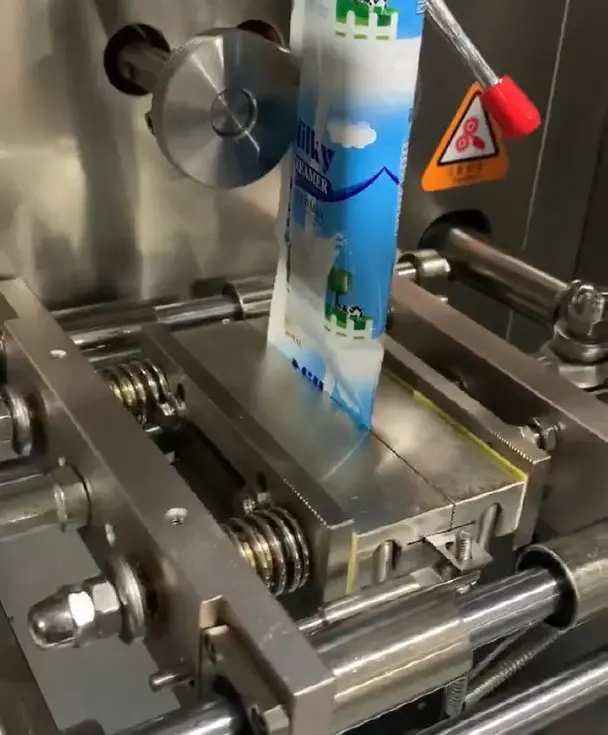
As the film tube descends past the forming collar, the two overlapping film edges pass through a vertical sealing unit — a pair of heated sealing rollers or a heated sealing bar that presses the two film layers together and bonds them with heat. This creates a continuous vertical seal that runs the full length of the film tube — the back seam of every bag produced in this run. The vertical seal unit runs continuously as long as the machine is running, creating the backbone of the bag structure. The seal temperature is controlled precisely by the machine’s temperature controller to match the film type and thickness — too cool and the seal is weak or incomplete, too hot and the film burns, discolours, or deforms. 

a-pair-of-heated-sealing-rollers-that-presses-the-two-film-layers-together-and-bonds-them-with-heat
a-pair-of-heated-sealing-rollers-that-presses-the-two-film-layers-together-and-bonds-them-with-heat-1

04 - Product filling

the-structural-former-that-gives-the-film-tube-its-cylindrical-shape
the-structural-former-that-gives-the-film-tube-its-cylindrical-shape-1

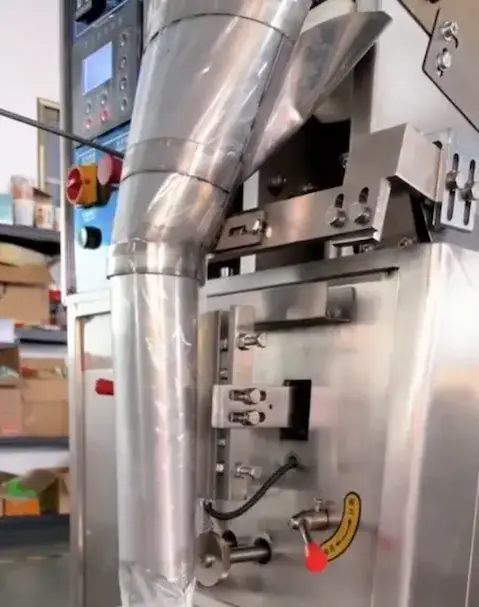
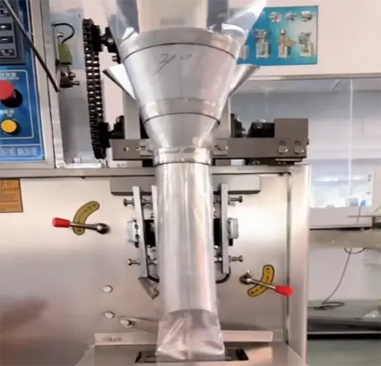
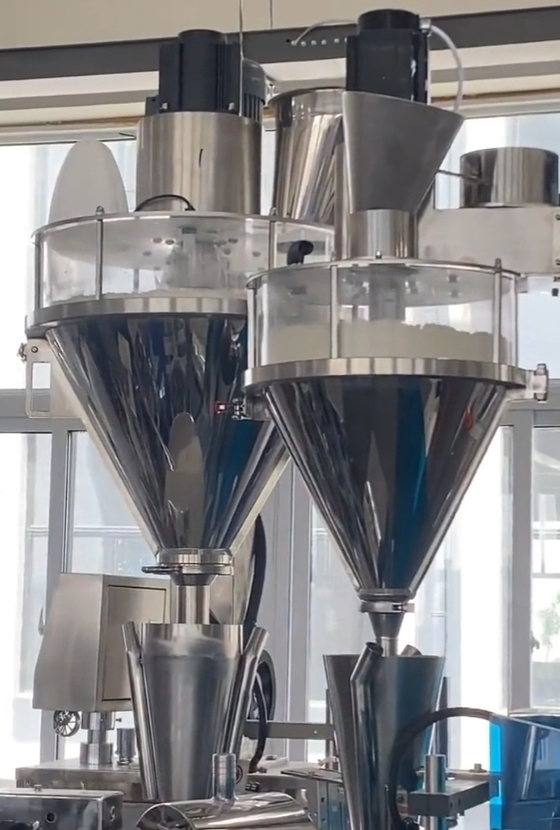
While the film tube is being formed and the back seam is being sealed, product is filled into the tube from above through the central forming tube — the hollow metal tube that the film wraps around during forming. The forming tube serves two purposes simultaneously — it is the structural former that gives the film tube its cylindrical shape, and it is the product delivery channel through which product falls into the bag below.

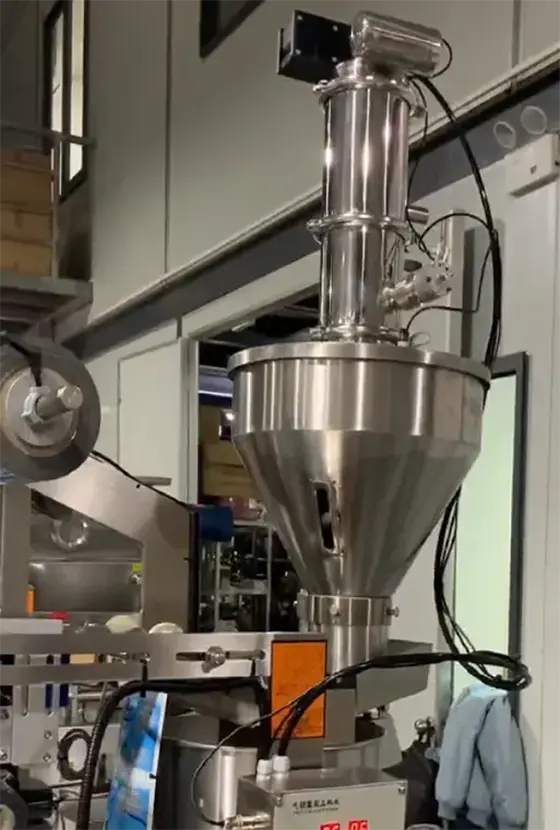
Product arrives at the top of the forming tube from an upstream weigher, volumetric filler, auger filler, or liquid pump depending on the product type. The fill is timed to release each measured dose of product at exactly the right moment in the bag-making cycle — after the bottom seal of the current bag has been made and before the top seal closes.

Timing the fill correctly is critical. The fill timing signal is sent by the PLC and coordinated with the jaw position sensor to ensure the product drop occurs only when the seal area is clear.

Product-arrives-at-the-top-of-the-forming-tube-from-an-upstream-1
Product-arrives-at-the-top-of-the-forming-tube-from-an-upstream

05 - Bottom seal formation

a-pair-of-sealing-jaws-closes-across-the-full-width-of-the-film-tube

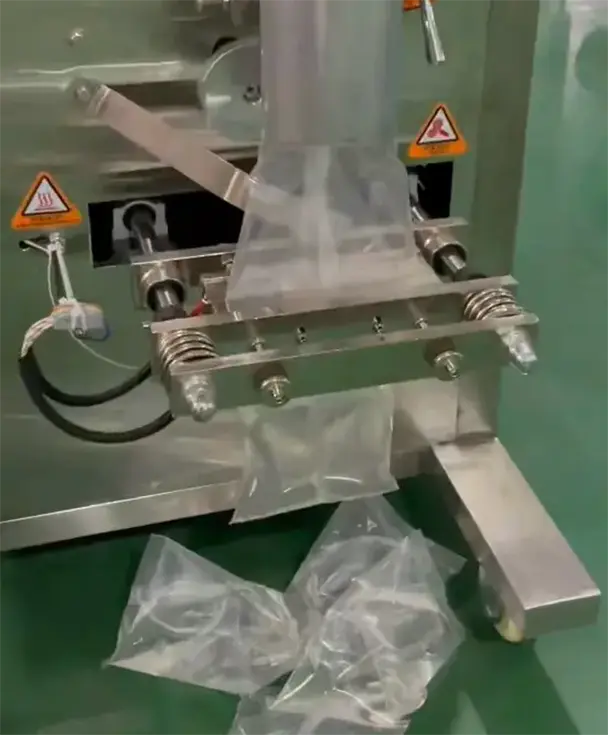
Below the forming tube, a pair of sealing jaws closes across the full width of the film tube, applying heat and pressure to create a horizontal seal. This seal simultaneously closes the bottom of the bag being filled above and the top of the bag already completed below.

The jaws are the most mechanically active component of the machine — they open and close on every bag cycle, must apply consistent heat and pressure across the full bag width, and must operate in perfect synchronisation with the film feed and the product fill timing.