Horizontal Form Fill Seal

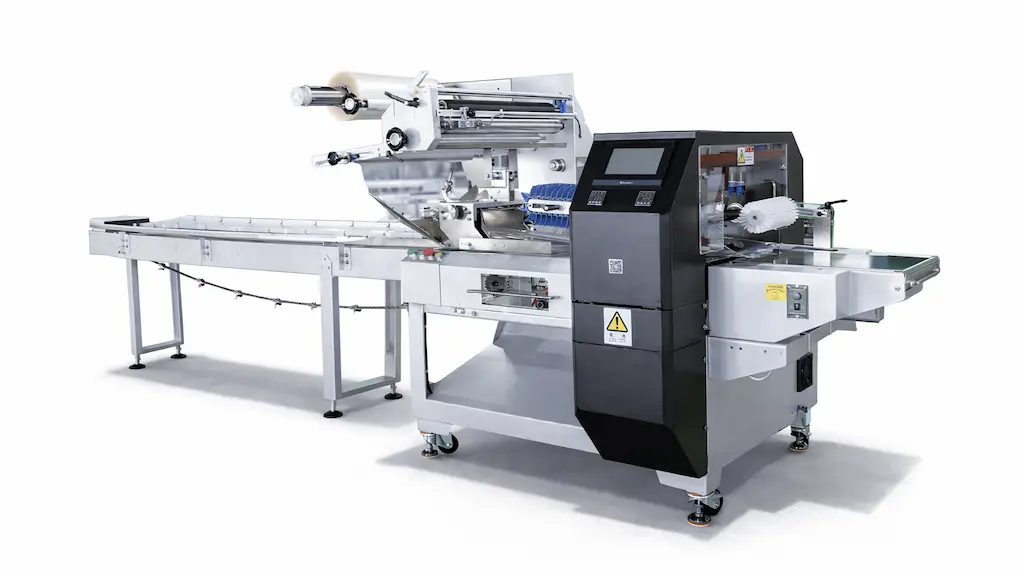
The HFFS machine is a high-speed automatic packaging machine that wraps individual products in film along a horizontal production line. A continuous roll of flat packaging film is formed into a tube around the product as it travels on a conveyor belt, then sealed and cut into individual wrapped packs — each one tight, clean, and ready for the shelf or the next stage of the line.

Horizontal-FFS-with-white-background

Demo

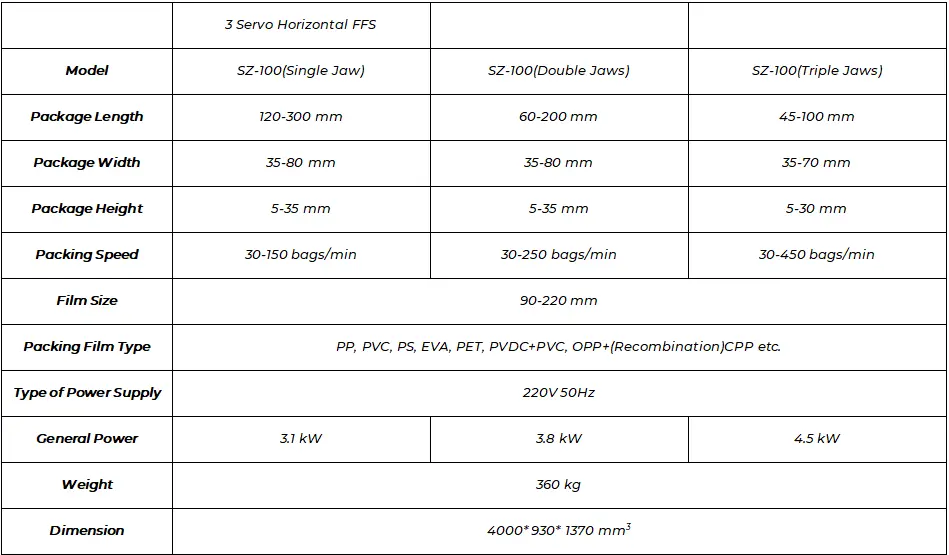
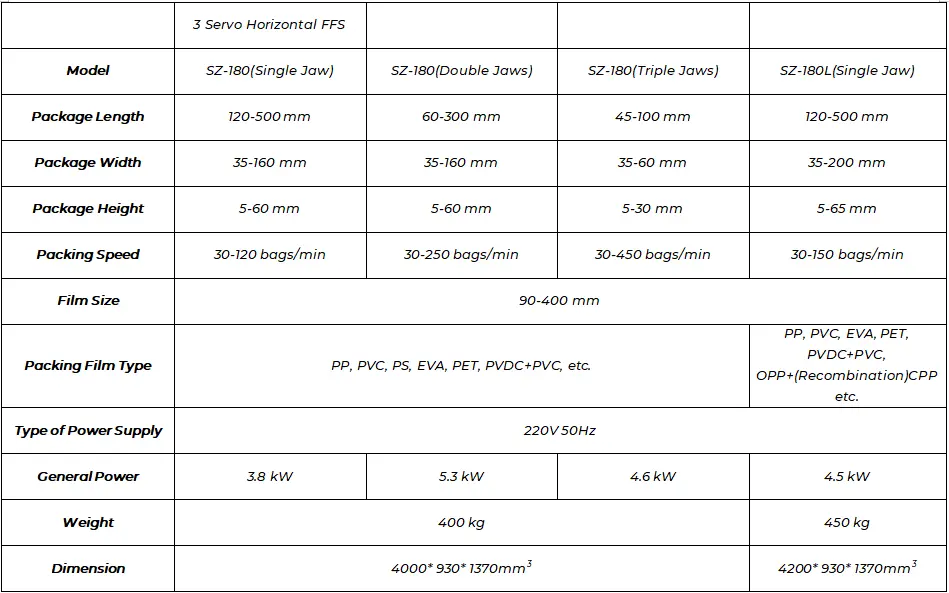
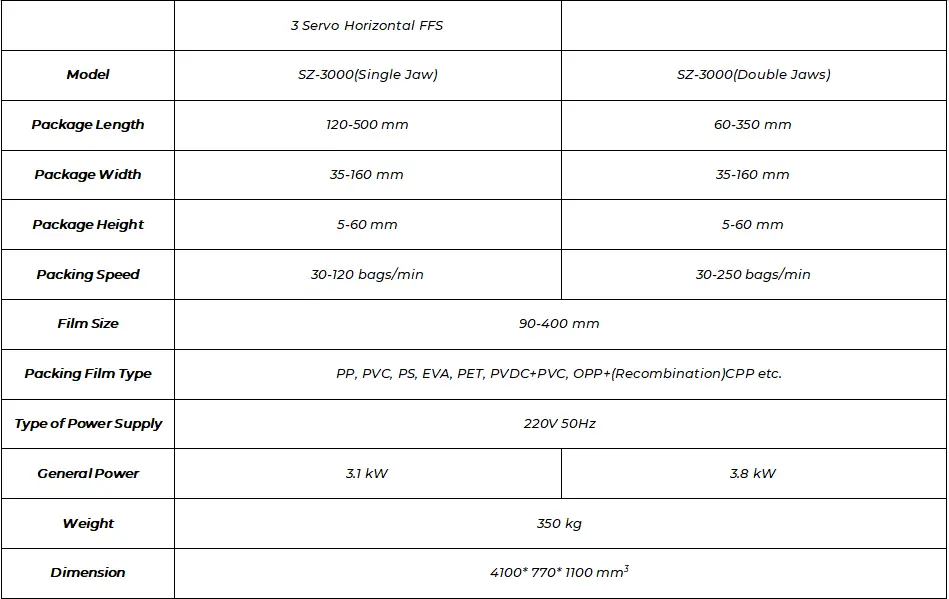
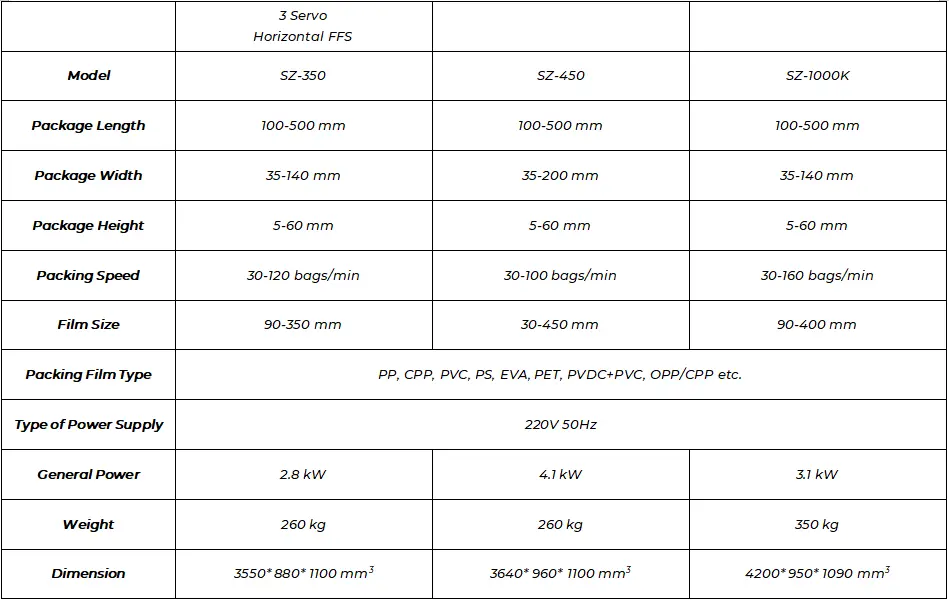
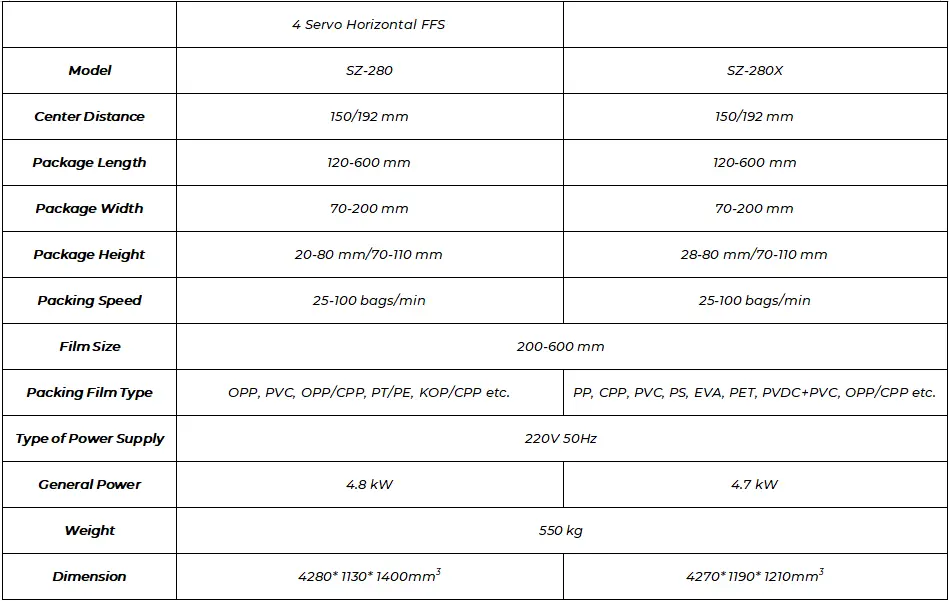
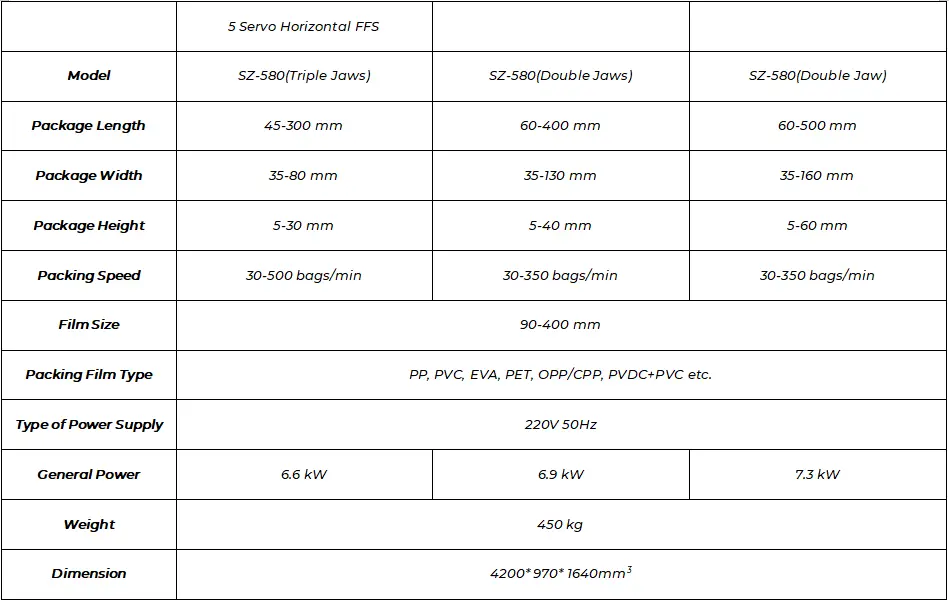
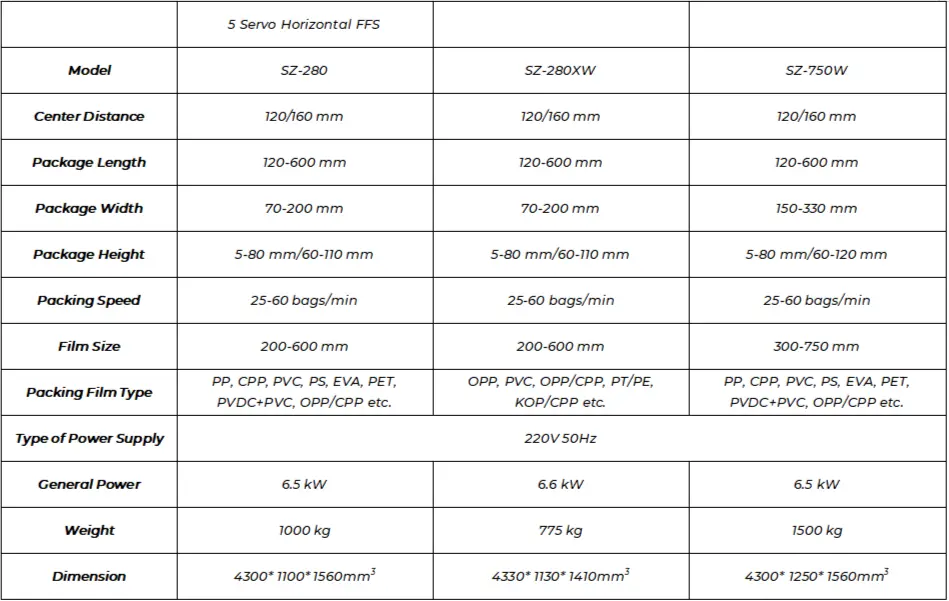
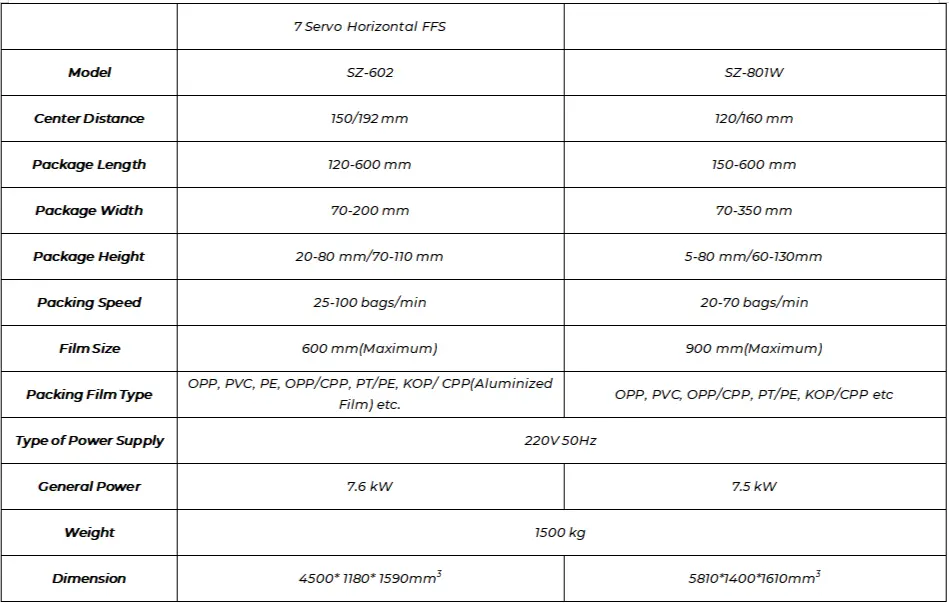
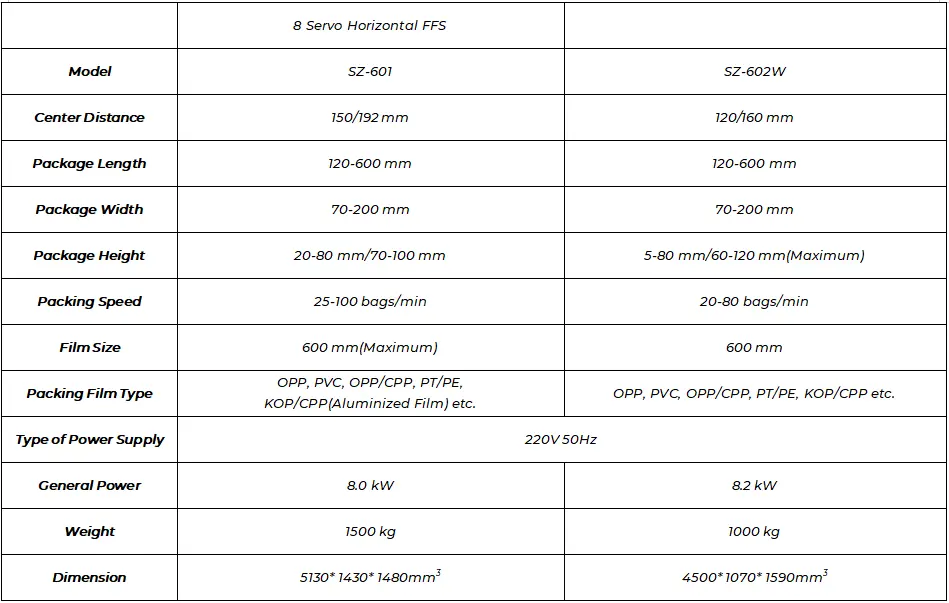
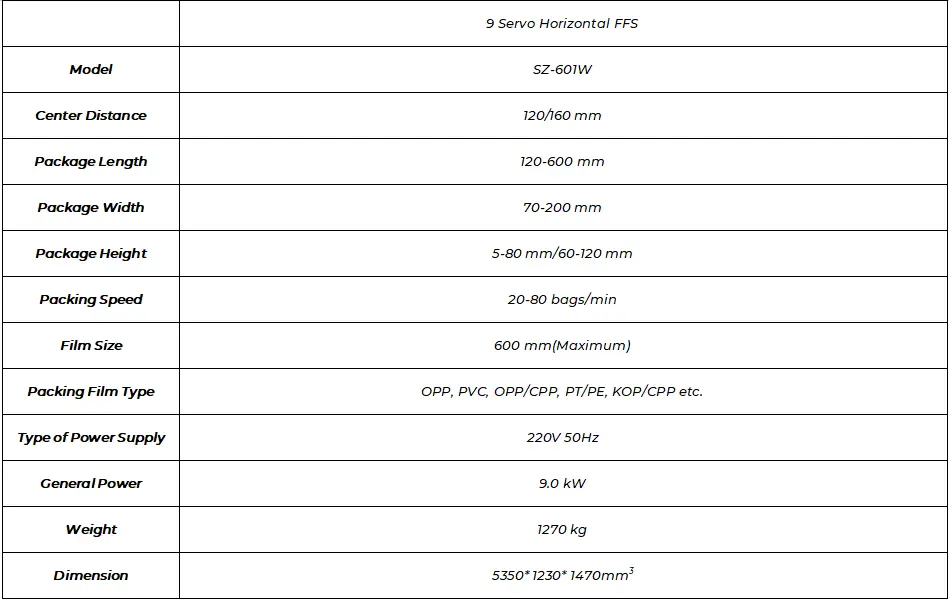
Technical Specifications

How does it work?

01 — Product Infeed

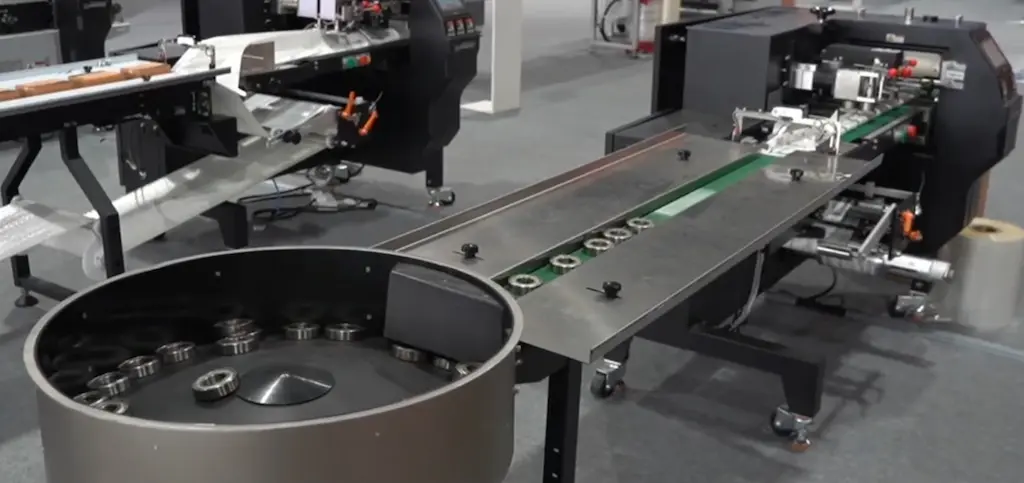
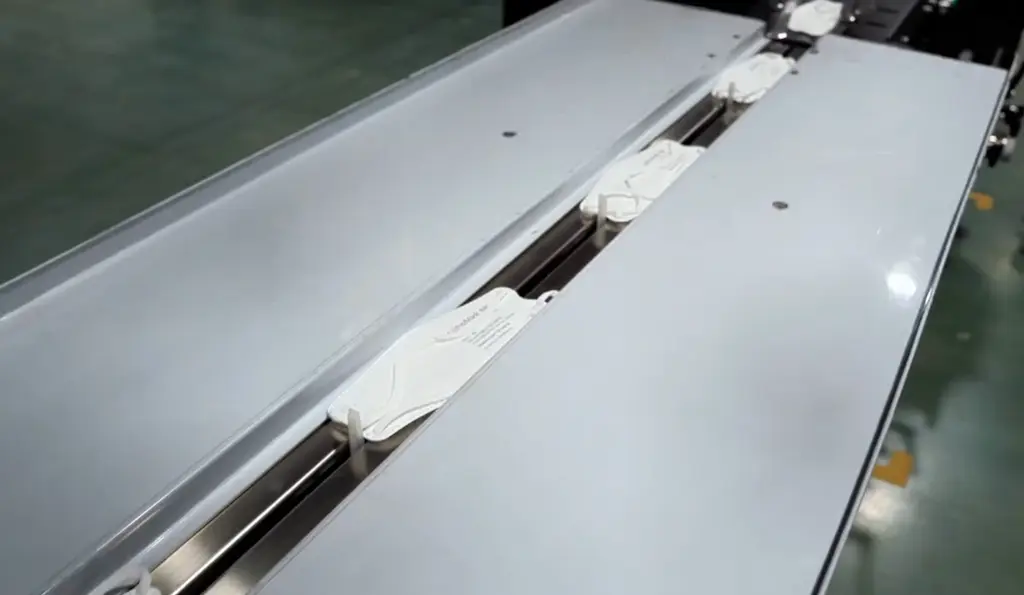
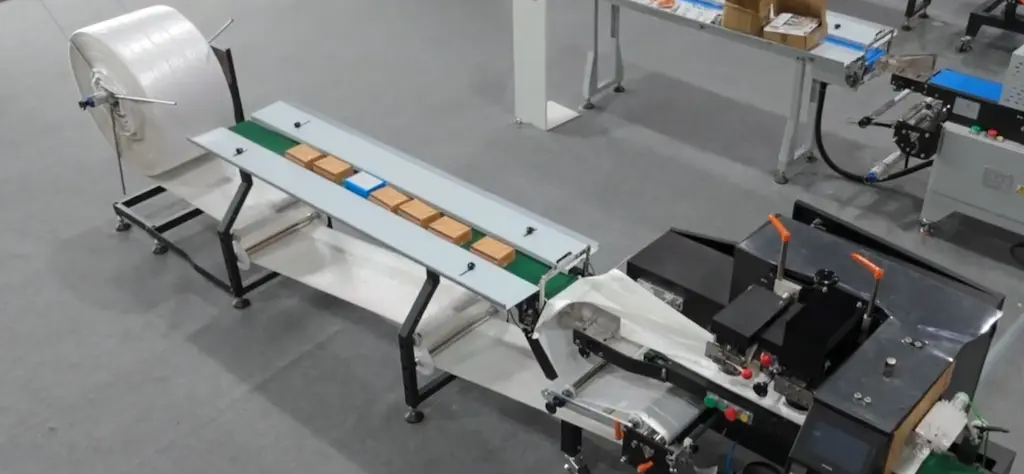
Products arrive at the infeed end of the machine one at a time on a flat conveyor belt or a lug chain — a chain with evenly spaced fingers that push each product forward at a consistent pitch. The products are already separated and oriented correctly before they enter the wrapping zone — by an upstream conveyor placing them onto the infeed belt automatically. The spacing between products is important,so the machine’s lug chain or infeed timing system maintains this spacing automatically throughout the run.

An-upstream-conveyor-for-HFFS

One kind of upstream conveyor

Conveyor belt with lug chain

02 — Film Unwinding

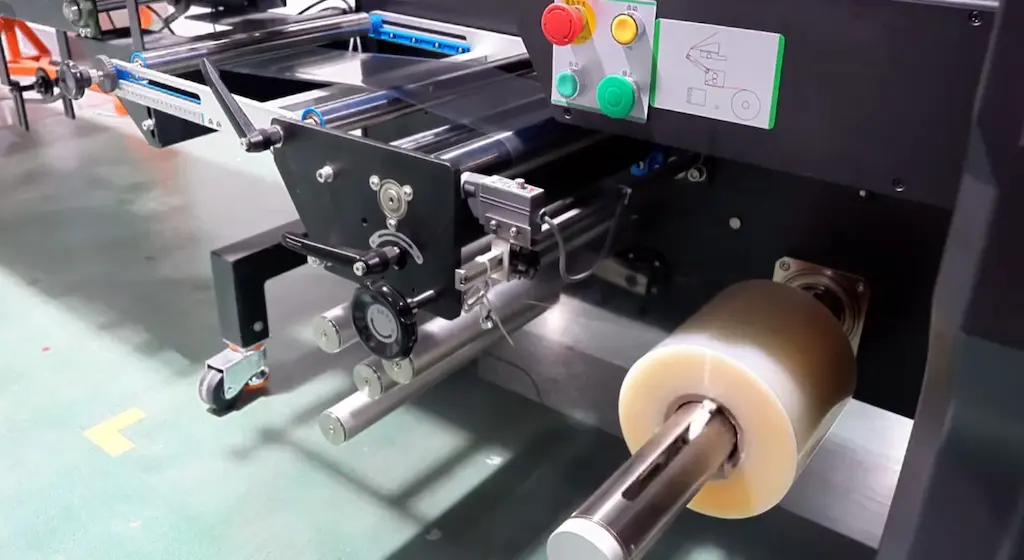
At the upside or underside of the machine, a roll of flat packaging film — typically polypropylene, polyethylene, or a laminate film depending on the product requirements — is mounted on a reel holder.

a-roll-of-flat-packaging-film-is-mounted-on-a-reel-holder

As the machine runs, the film unwinds continuously from the roll and is fed forward through a series of guide rollers that keep it under consistent tension. The tension control is critical — too loose and the film wrinkles or misfeeds, too tight and it stretches or tears. A dancer roller or electronic tension control system adjusts the film tension automatically as the roll diameter decreases and the film weight changes.

Guide-rollers-1

Guide rollers

03 — Film Forming

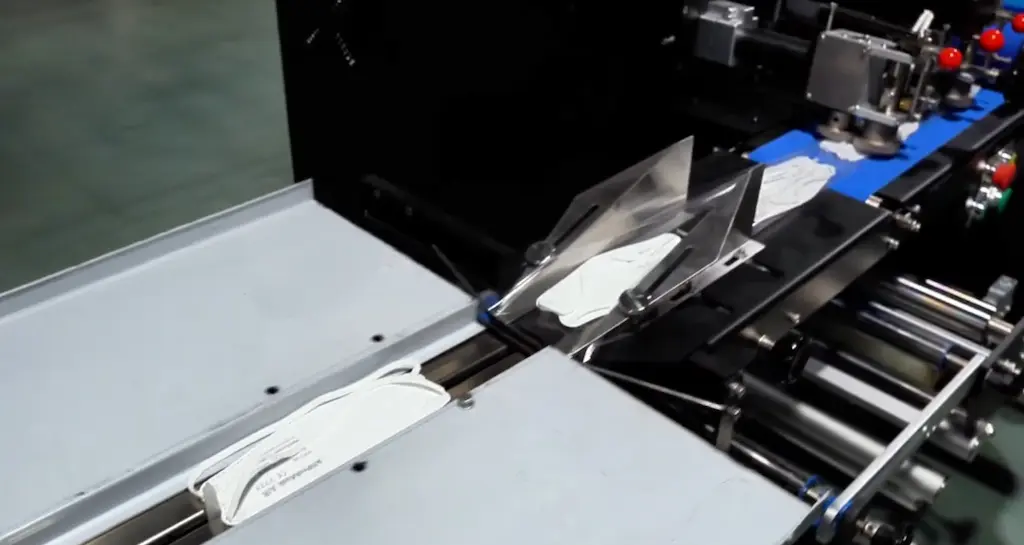
The flat film passes over and around a forming shoulder — a precisely shaped metal former that folds the flat film around the product as both the film and the product move forward together at the same speed. The forming shoulder wraps the film up and around the sides of the product and brings the two edges of the film together above or below the product to create an overlap. 


At this point the film is wrapped around the product on three sides — left, right, and top or bottom — with the two film edges meeting in the centre to form a continuous fin. The product is now enclosed in a loose film tube, moving forward through the machine inside this tube.

Forming-shoulder

Forming shoulder

04 - Centre Fin Seal

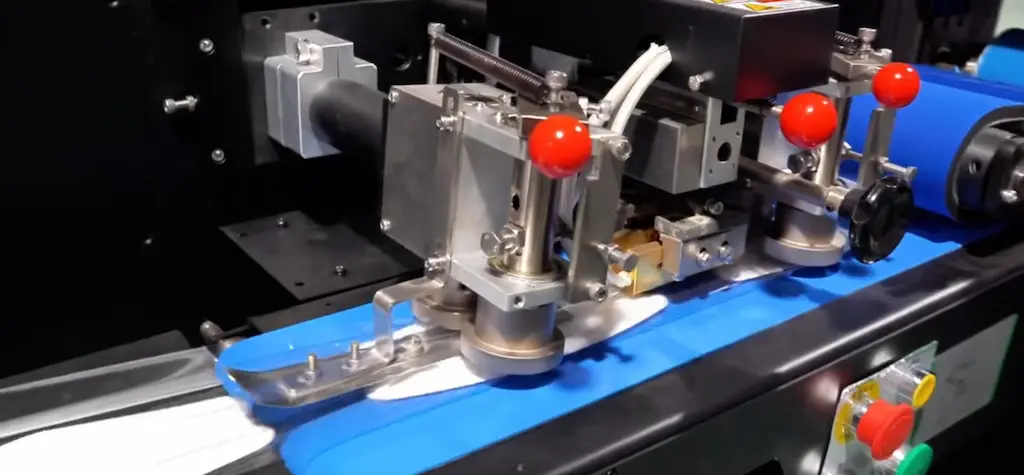
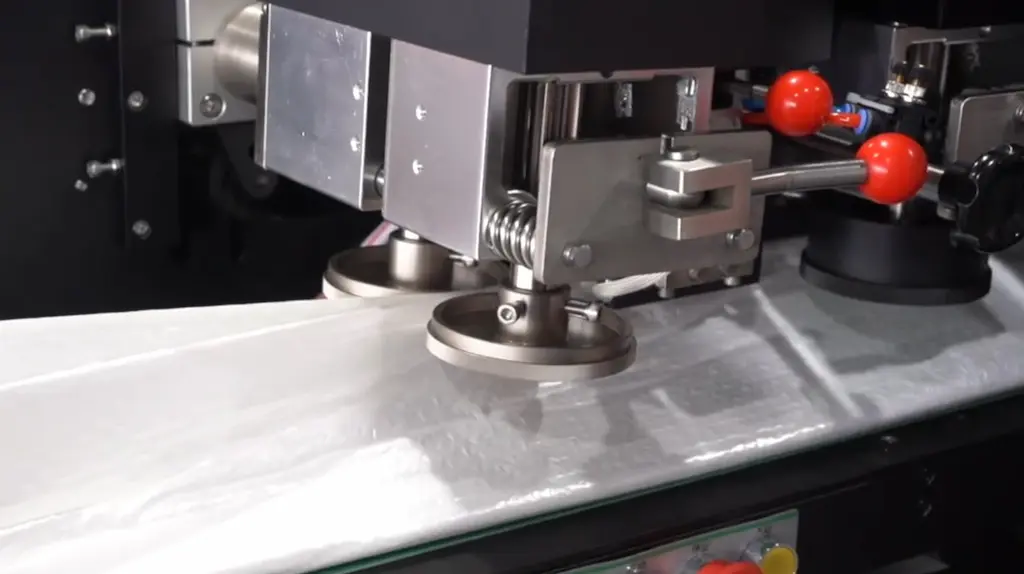
The two overlapping film edges that meet above or below the product are now sealed together by a heated fin seal wheel or a pair of heated sealing rollers.

Center-fin-seal-system

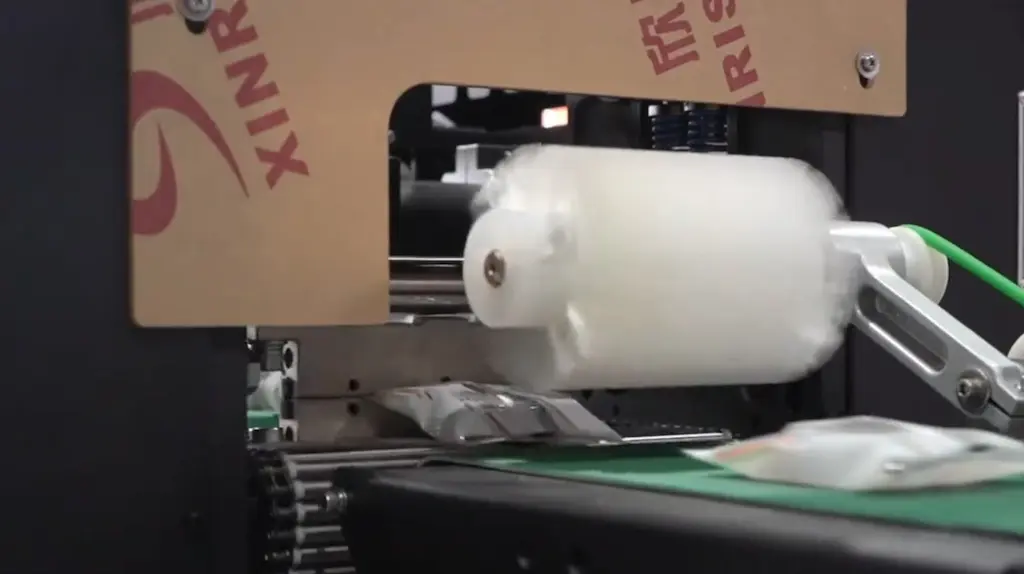
The fin seal wheel presses the two film layers together while applying heat — the heat activates the heat-seal coating on the inner face of the film, bonding the two layers into a continuous, airtight fin that runs the full length of the product. The fin seal runs longitudinally along the pack — parallel to the direction of travel — and forms the backbone seal of the finished wrap.

The-fin-seal-wheel-presses-the-two-film-layers-together

05 - Cutting

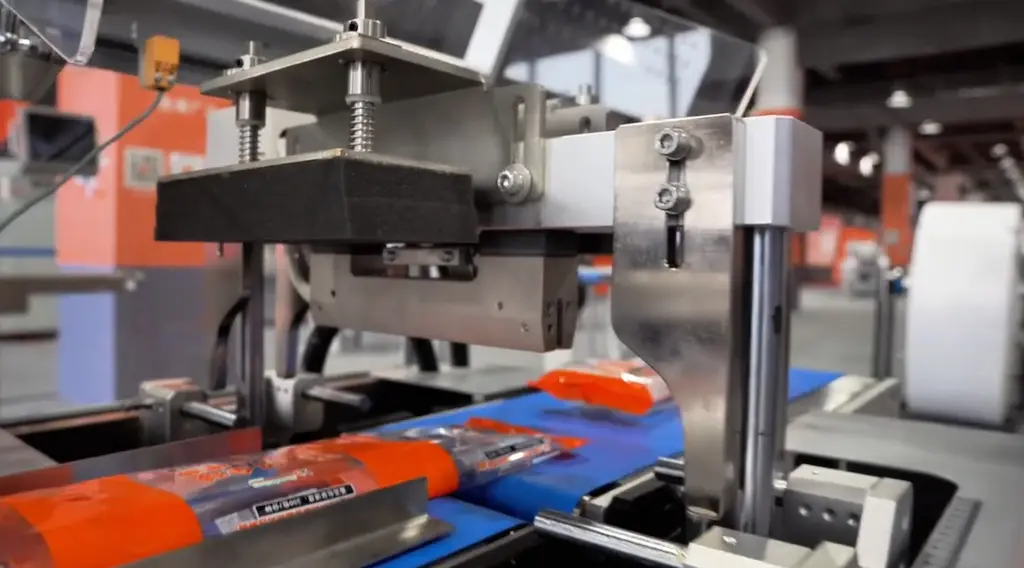
With the product now enclosed in a sealed film tube and moving forward, the next step is to separate individual packs from the continuous tube and seal both ends. This is done by a rotating end seal and cut unit — a pair of heated jaw bars mounted on a rotating wheel or a reciprocating motion system that moves in sync with the product travel speed. 

A-pair-of-heated-jaw-separates-individual-packages-from-the-continuous-tube

As the jaws close on the film between two consecutive products, they apply heat and pressure simultaneously across the full width of the film — sealing the trailing end of the pack behind and the leading end of the next pack ahead in a single action. A blade built into the jaw set cuts through the centre of the sealed zone at the same moment, separating the finished pack from the continuous film tube in one combined seal-and-cut motion.

A-blade-built-into-the-jaw-set-cuts-through-the-centre-of-the-sealed-zone

How the HFFS machine controls everything?

servo motors

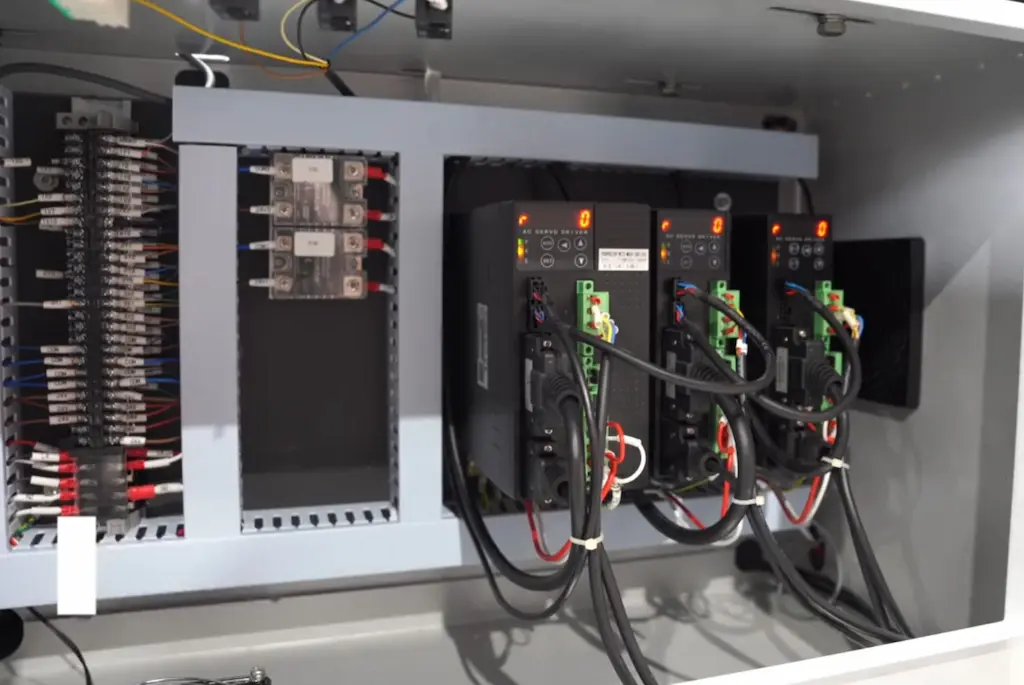
The HFFS machine replaces this with individual servo motors — one for each major moving axis. A servo motor is a precisely controlled electric motor that knows its exact position, speed, and torque at every moment of its rotation. It receives instructions from the PLC and executes them with extreme accuracy — positioning itself to within a fraction of a millimetre and adjusting its speed in real time without any mechanical linkage to other parts of the machine.

servo-motors

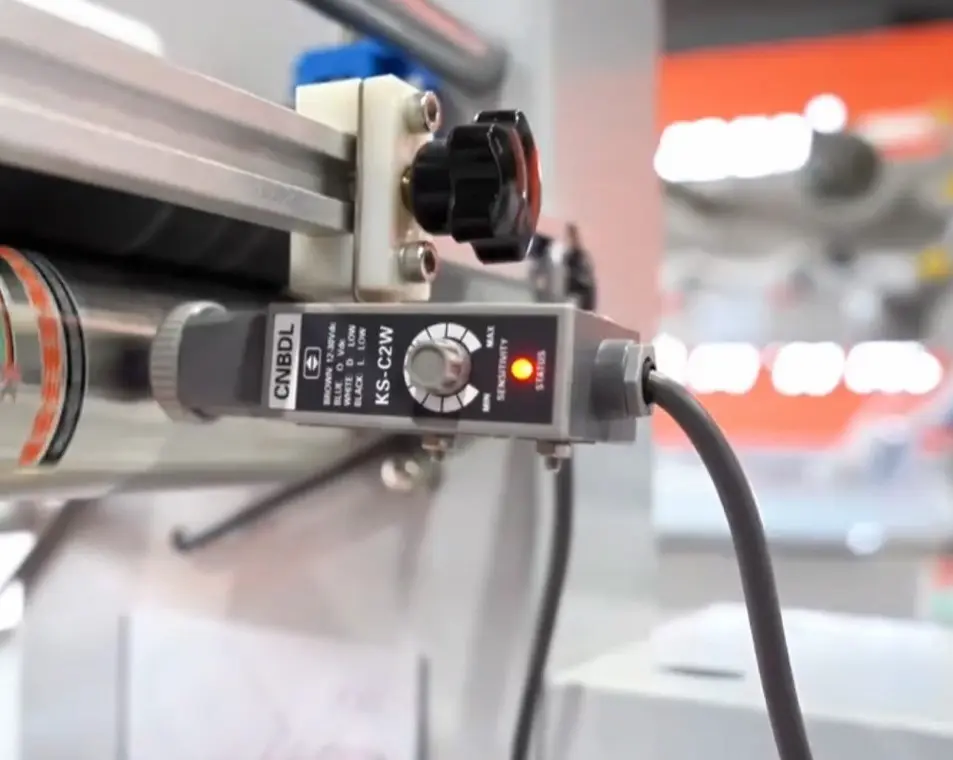
Film feed sensor

Controls the rate at which film is pulled from the roll and fed forward through the machine. The film feed servo must be precisely synchronised with the product conveyor servo. The film feed servo receives continuous position feedback from film feed sensor and adjusts its speed in real time to control the length of each package.This process can be easily managed through the operator panel.

Film-feed-sensor

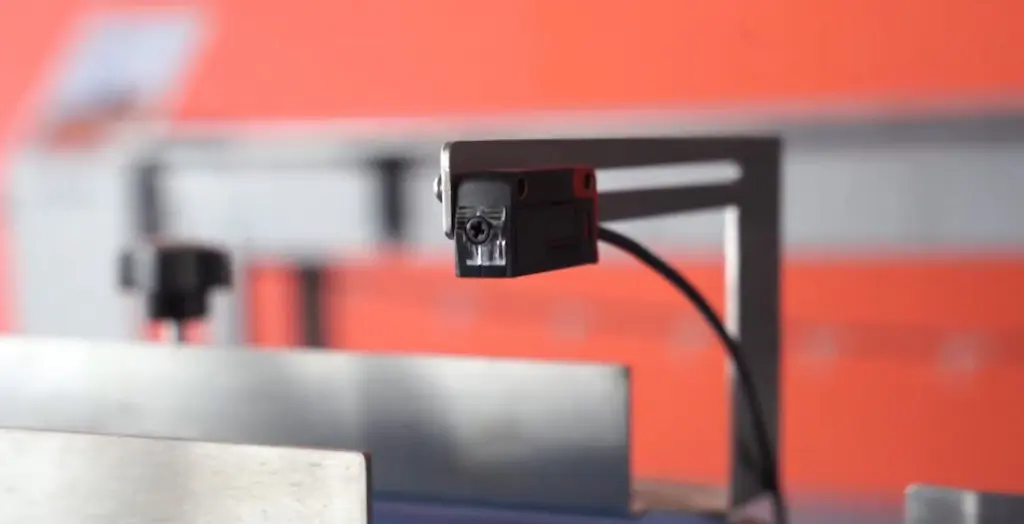
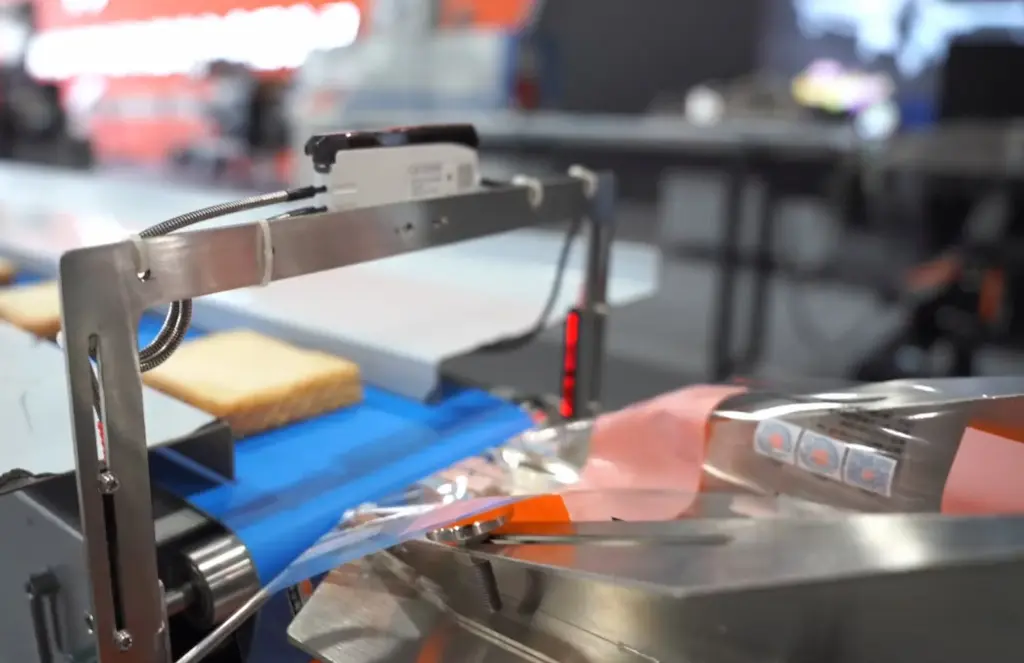
Product infeed sensor

Product-infeed-sensor-1

A photoelectric or vision sensor at the infeed end of the machine detects each product as it enters the lug chain or conveyor. This sensor confirms the presence, position, and spacing of every product entering the wrapping zone. If a product is missing — a gap in the infeed — the sensor signals the PLC, which can either stop the machine, skip a sealing cycle to avoid producing an empty pack, or flag the gap position so the end seal jaws close on film only without product inside.

Product-infeed-sensor-2